
The AI calendar that books the appointment in the same breath someone asks for it
A booking link makes your customer do the work; a voicemail box loses them entirely. Call, chat, or text, Iris books the appointment in the conversation, then confirms and reminds. AI appointment scheduling that catches the booking the moment someone asks.
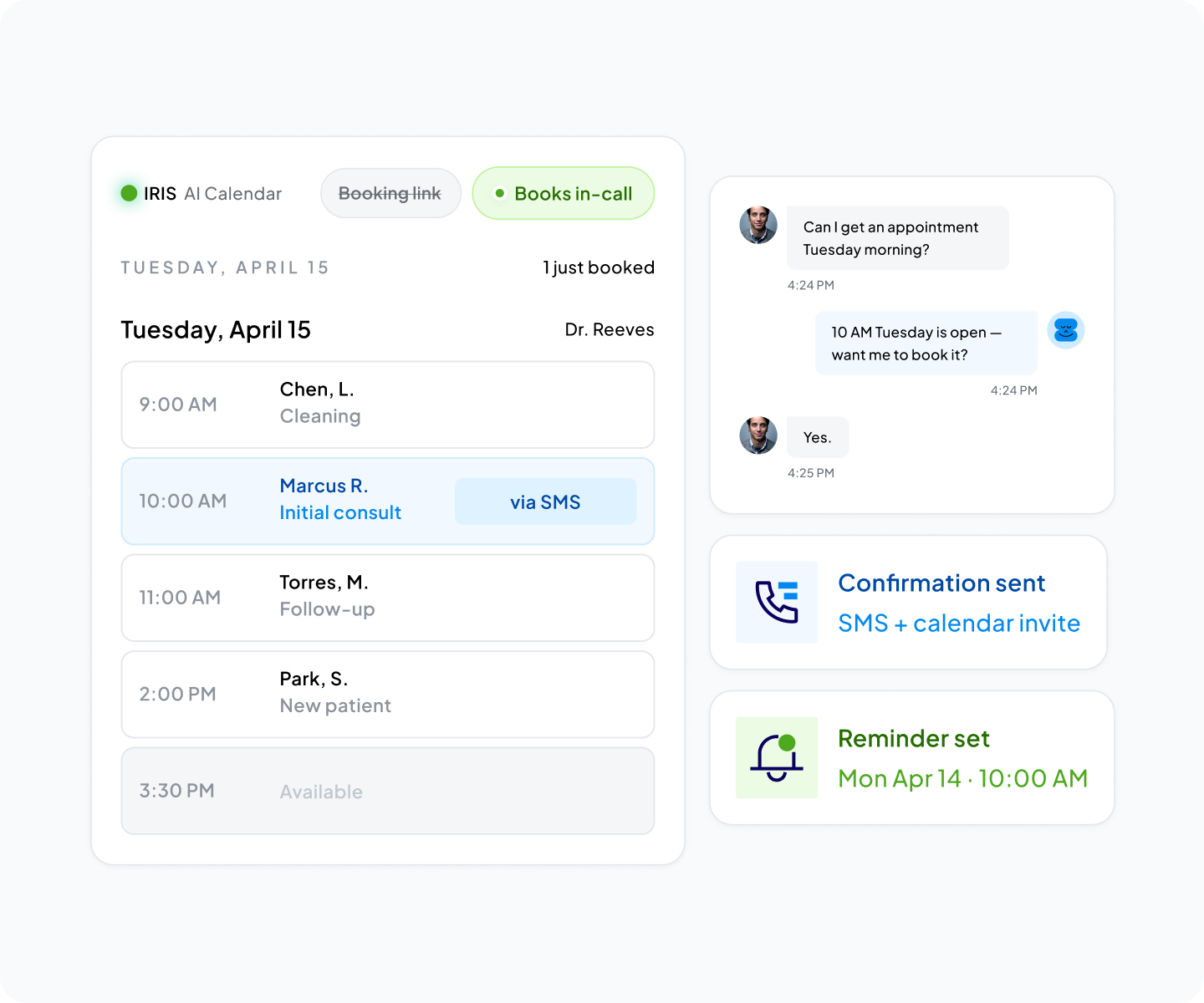
Every missed call is a
The phone rings while you are with a customer, so it goes to voicemail. The chat sits until tomorrow. The text comes in after hours. None of those people wanted to leave a message. They wanted a time on the calendar, now. The booking does not get missed in your scheduling tool. It gets missed long before it reaches the calendar.
The call goes to voicemail.
Nobody books a haircut, a consult, or a service call by leaving a message. They hang up and dial the next name on the list.
Booked while they still want the slot.
Iris does not take a message and promise a callback. It offers a time and books it right there, at the moment of intent, the one moment a booking link cannot reach.
The booking link gets ignored.
A link asks the customer to do the scheduling. Most will not, and the ones who do often forget the time they picked.
Iris does the scheduling for them.
In the conversation they already started, Iris checks what is open, offers a real slot, and books it. The customer gets a time, not a link to chase.
No-shows eat the slots that did get booked.
An appointment with no reminder is a coin flip. The slot is held, the customer forgets, and that hour earns nothing.
A confirmation after, a reminder before.
After Iris books the slot, it sends a confirmation and a reminder through the same AI SMS that runs your follow-up. Show-up rate stops being your front desk's job to chase.
Rescheduling is a phone-tag loop.
A customer calls to move a time, leaves a message, and the back-and-forth burns a day while the slot sits in limbo.
They reply in the thread; Iris moves the booking.
When plans change, the customer replies in the same thread and Iris handles the change instead of starting a phone-tag loop. A freed slot is a slot you can fill.
What Iris does as your appointment scheduler
We built Iris to work at the front of the booking, which is where we watch appointments actually get requested and lost. Every capability below runs in the same conversation, so the booking, the confirmation, and the reminder are one motion rather than three tools handing off to each other.
When a customer calls, chats, or texts, Iris does not take a message and promise a callback. It offers a time and books it right there, while the customer still wants the slot. That is the moment of intent, the one moment a booking link cannot reach.
A booked appointment is worth nothing if the customer forgets it. After Iris books the slot, it sends a confirmation and a reminder through the same AI SMS that runs your follow-up. Show-up rate stops being your front desk's job to chase.
Plans change. When a customer needs to move an appointment, they reply in the same thread, and Iris handles the change instead of starting a phone-tag loop. A freed slot is a slot you can fill.
Iris sends the booking to the right person, notifies your team, and logs the appointment so the record is clean. No double-entry. When the booking lands in your AI CRM, it arrives already captured and documented, next to the call or chat that produced it.
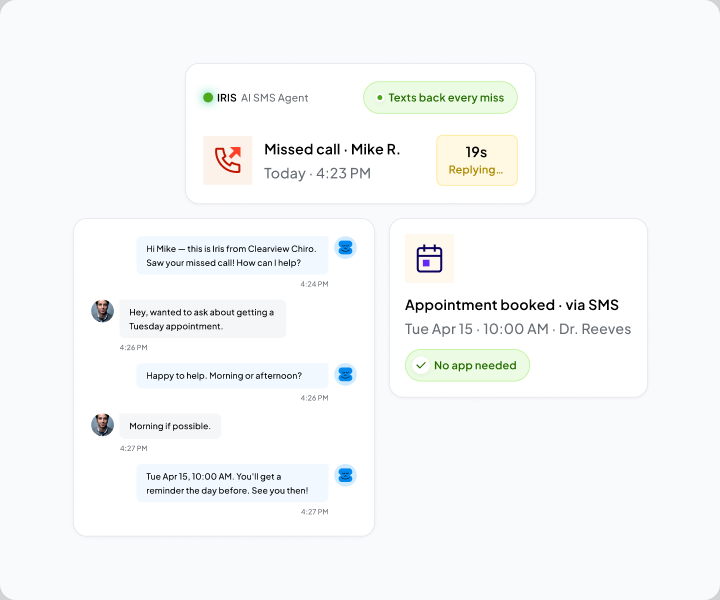
How Iris turns a request into a booked, confirmed appointment
No phone tag. No booking link the customer has to chase. Here is the loop, start to finish.
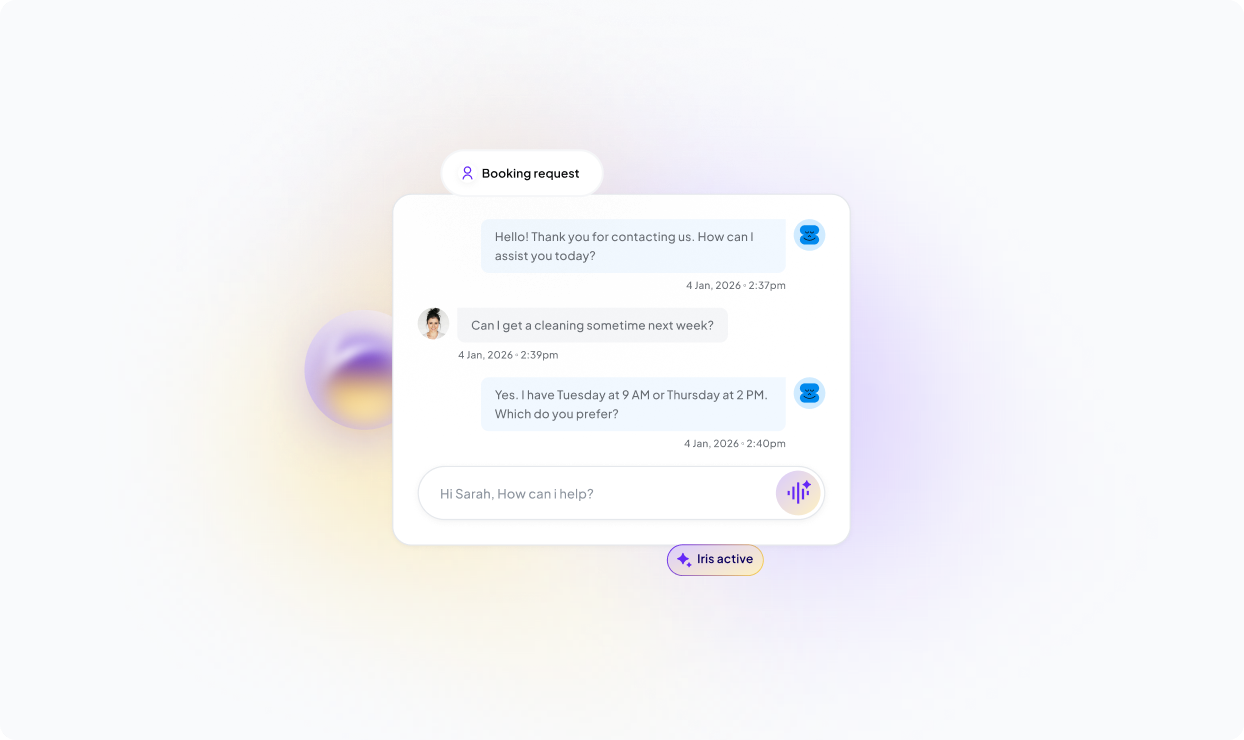
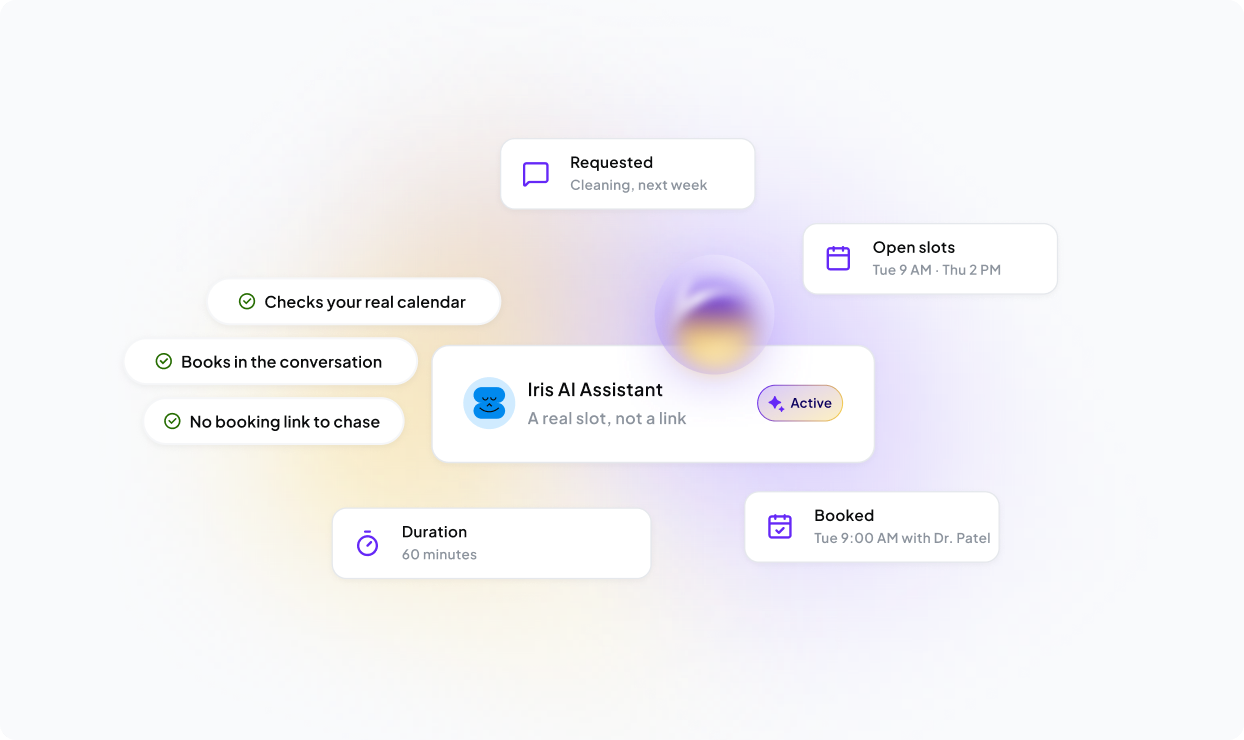
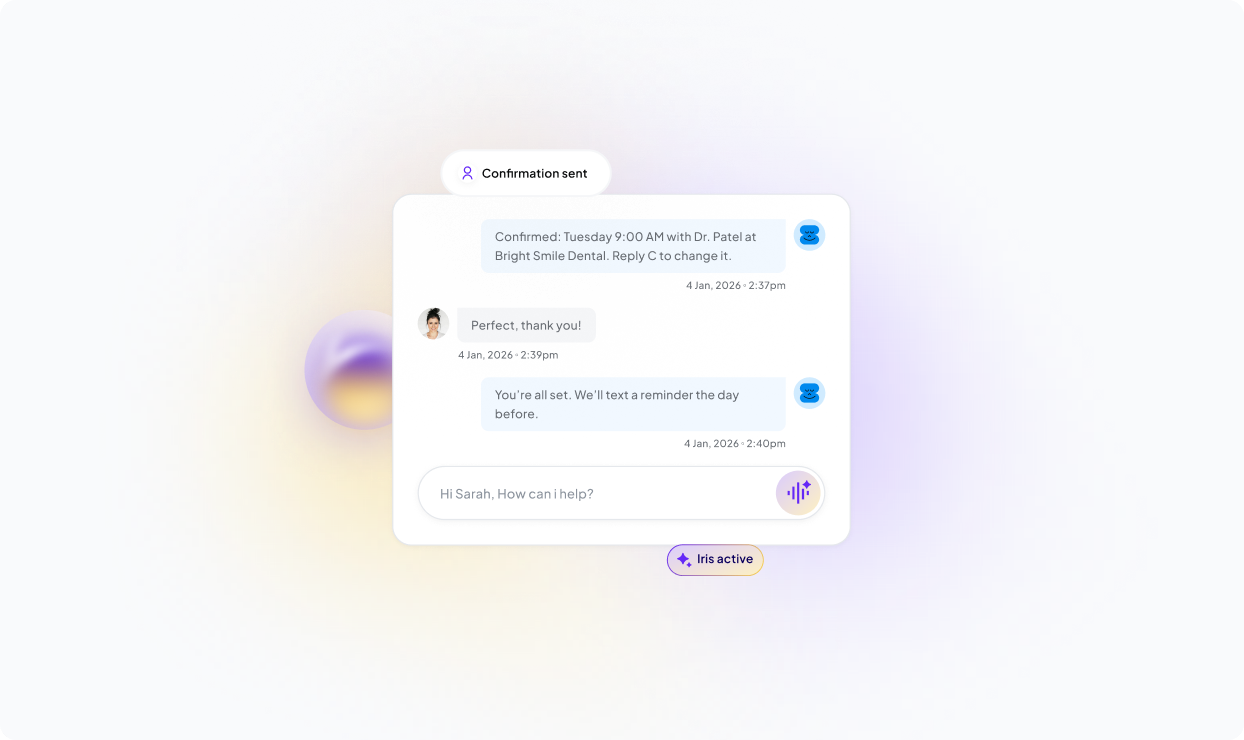
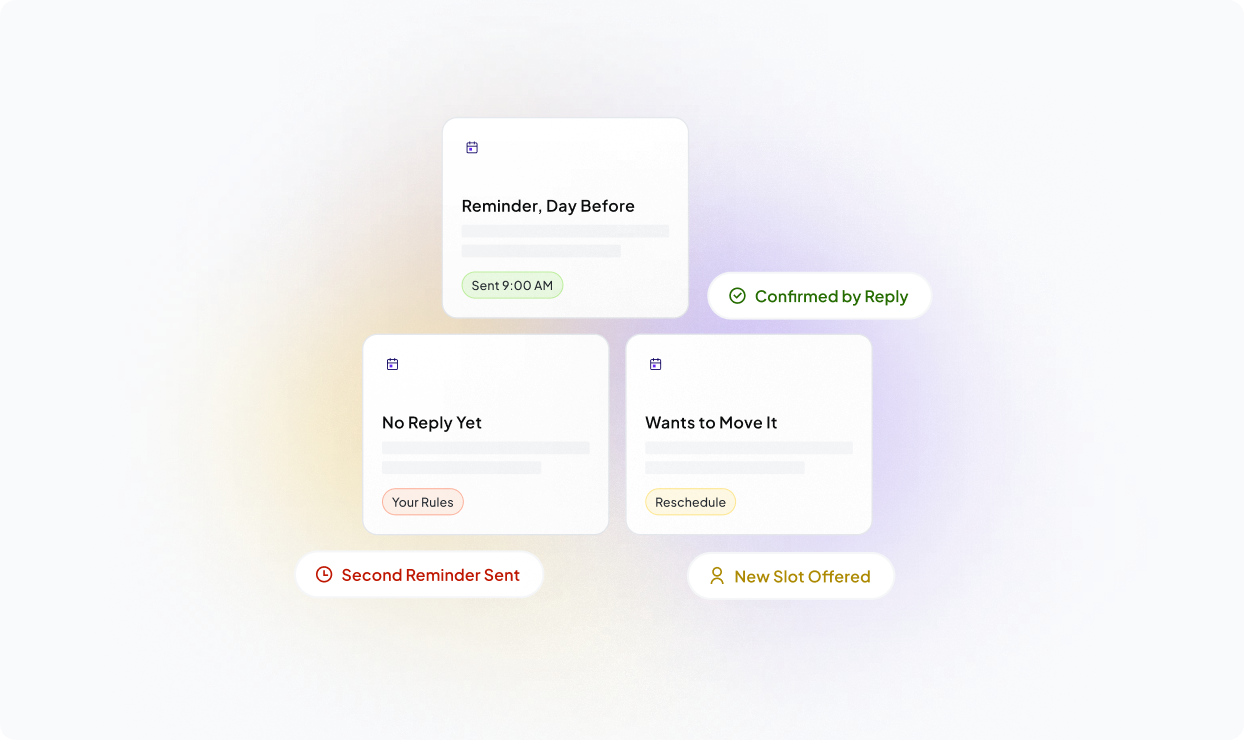
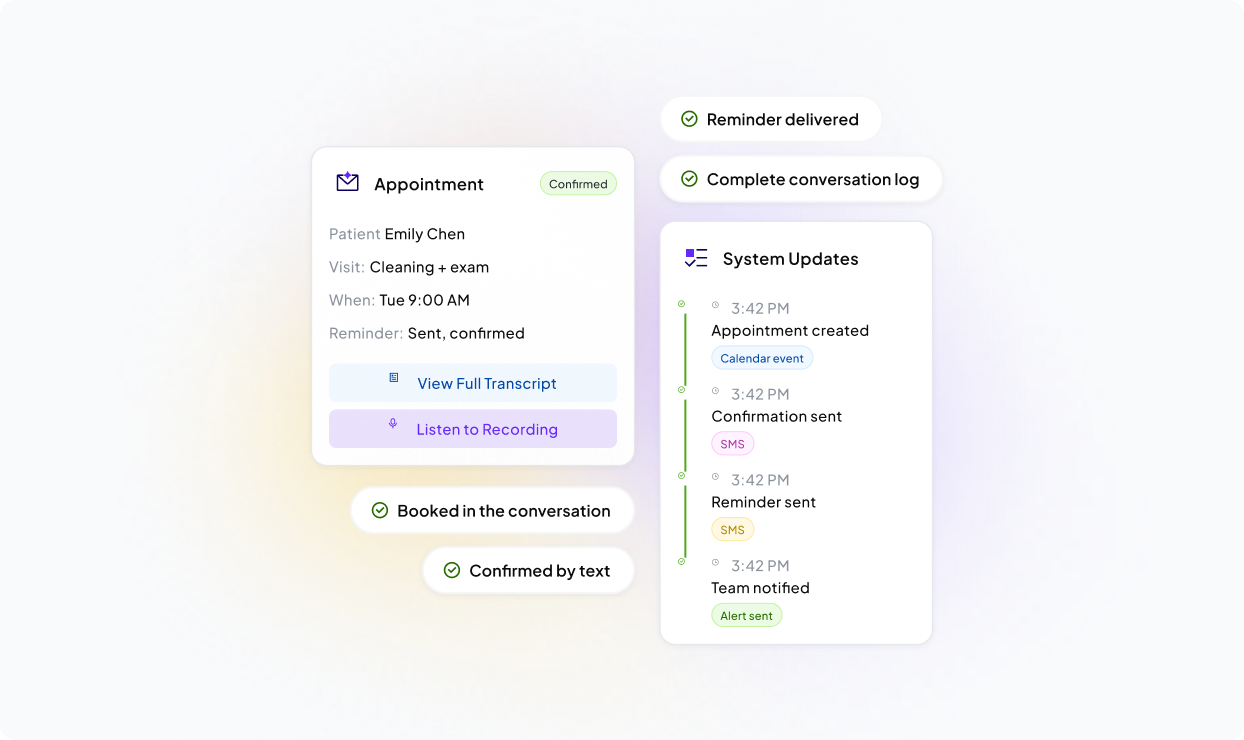
Why AI appointment scheduling beats a link and a
The difference is not features on a grid. It is where the booking starts. A link starts after the customer agrees to do the work; Iris starts at the conversation that creates the appointment.
What Iris will not do to your calendar
You already have a calendar and a way of booking, and probably some scar tissue from tools that overpromised. Iris is built to fit around that, not to replace it.
Iris does not rip out the calendar or scheduling tool you already run. It books, confirms, and reminds at the front of the conversation, then puts it where your team already looks. It is the booking layer your calendar has always been missing.
Iris books against your real availability, so two customers never land in the same slot. The calendar stays accurate because the booking and the record are the same action, not something re-typed later and gotten wrong.
The bookings and conversations Iris captures belong to you. What is kept, and who sees it, stays your call. The speed of automation never costs you control.
Iris works inside the rules you set: your hours, your services, and when a request goes to a person instead. You decide where the line is, and Iris handles the booking.

Built by dotfun.
Operators who live on booked time are who our Run Good engineers build automation for. AI appointment scheduling is what that engineering looks like as a product: the booking and the reminder running on their own, so no appointment goes un-booked or un-reminded. The calendar is where marketing spend finally turns into revenue. We would rather it fill itself than depend on someone getting to the phone in time.
When revenue runs on
AI appointment scheduling earns its keep in the teams where the customer books by phone, chat, or text, and where a missed first response is a missed appointment.

Local-service businesses that run on appointments
Salons, clinics, home services, studios. When a customer wants a time, they book with whoever picks up first. Iris makes sure that is you, day or night, and reminds the customer so the slot does not turn into a no-show.

Solo operators and small teams
You cannot answer the phone and book the appointment while serving the customer in front of you. Iris does both. It captures the calls, chats, and texts you would otherwise miss, books them, and reminds, so demand turns into a full calendar instead of a voicemail.

Practices managing patient scheduling and reminders
For teams handling AI for patient scheduling and appointment reminders, Iris answers the request, offers a real time, books it, and sends the reminder that protects the slot. The front desk stops being the bottleneck at both ends of the appointment.
The practical side of AI appointment scheduling
AI appointment scheduling is a system that books, confirms, reschedules, and reminds on its own, in real time. The customer never gets sent to voicemail or a link they have to chase. A plain online scheduler is mostly a booking page where the customer does the work themselves. An AI appointment scheduler does it for them: it answers the conversation, offers a time, books it, and sends the confirmation and the reminder.
Iris answers the inbound call, chat, or text the moment it comes in, offers an available time, and books the appointment right there in the conversation. Then it sends a confirmation by text, reminds the customer before the slot, and handles the reschedule if plans change, all without phone tag. The booking is routed to your team and logged automatically, against the same record that holds the call it came from.
AI Calendar automates the full booking loop: capturing the appointment, sending the confirmation, reminding before the slot, handling reschedules and cancellations, and routing, notifying, and logging every booking. The offer and the capture happen inside the call, chat, or text itself. We built it so the scheduling never sits apart from the conversation that produced it, which is why the reminder knows what the customer booked and who they spoke to.
AI Calendar is one layer of the same Iris system, so the booking is never a silo. The AI receptionist and AI web chat take the request, AI voice books it on a live call, AI SMS sends the confirmation and reminder, and AI CRM logs the booked appointment as a clean record. You do not stitch five tools together. They are surfaces on one Iris system, reading the same context and writing to the same record.
AI Calendar fits any business where revenue runs on booked time and a missed first response is a missed appointment. Think salons, clinics, home services, studios, and solo operators who cannot answer the phone and serve the customer at once. It is built first for local-service businesses and small teams that lose bookings to voicemail and no-shows, and it also fits practices managing patient scheduling and reminders, where the confirmation and the reminder matter as much as the booking itself.
No. Iris does not replace the calendar or scheduling tool you already use, and it is not trying to be a full calendar platform. It works alongside what you have: it captures and books the appointment at the first conversation, then puts that booking where your team already looks. Keep your calendar. Let Iris handle the booking and the reminder the calendar was never built to do on its own.
Iris does not improvise. When a request goes beyond a standard booking, a special case or a question only your team can answer, it captures the details, routes the request to the right person, and notifies your team to step in. You stay in control of the bookings that need a human, and Iris handles the routine scheduling.
The bookings and conversations Iris captures belong to you. Iris is built to handle customer data responsibly and keep your records protected, and you stay in control of what it logs and how it is routed. The speed of automated booking should never cost you control of your data.