
The answering service for small business that answers, books, and follows up
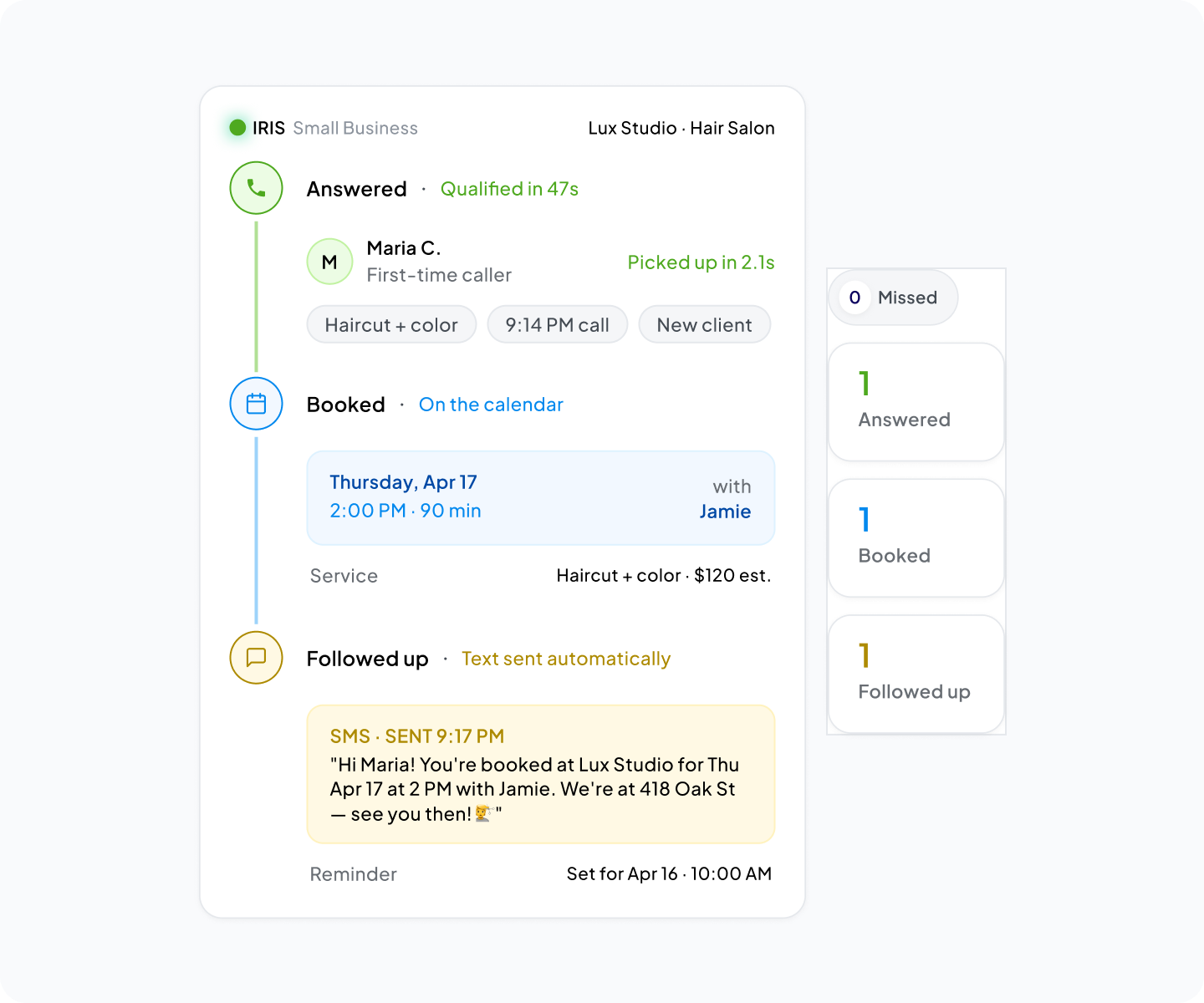
In a small business, the front desk is you. The caller sent to voicemail dials the next name. Iris picks up, qualifies the caller, books the appointment, and sends the follow-up. Answering is where most owners start with Iris. It is not where Iris stops.
A missed call is a customer hiring
Nobody calls a small business to chat. They call ready to buy, book, or fix something, and they keep dialing until someone answers. A Harvard Business Review study found that companies contacting a new lead within an hour were nearly seven times likelier to qualify it than those that waited even an hour longer. Speed is not a nice-to-have. It is the sale.
You are the front desk.
Mid-job, mid-appointment, driving between the two. Nobody catches the ring, because the receptionist is you.
Answered in seconds, in your business name and tone.
Iris picks up every hour of every day, runs the conversation, and hands you a qualified request instead of a voicemail.
The day does not end at five.
Customers research and call in the evening. Voicemail after hours hands them to a competitor who answers.
Iris never closes.
Nights, weekends, holidays, lunch rushes: every call is answered, qualified, and either booked or routed by the rules you set, without a separate after-hours plan.
One line, one conversation.
A busy morning stacks callers behind a busy signal, and second callers rarely try a third time.
Three callers at once? All answered.
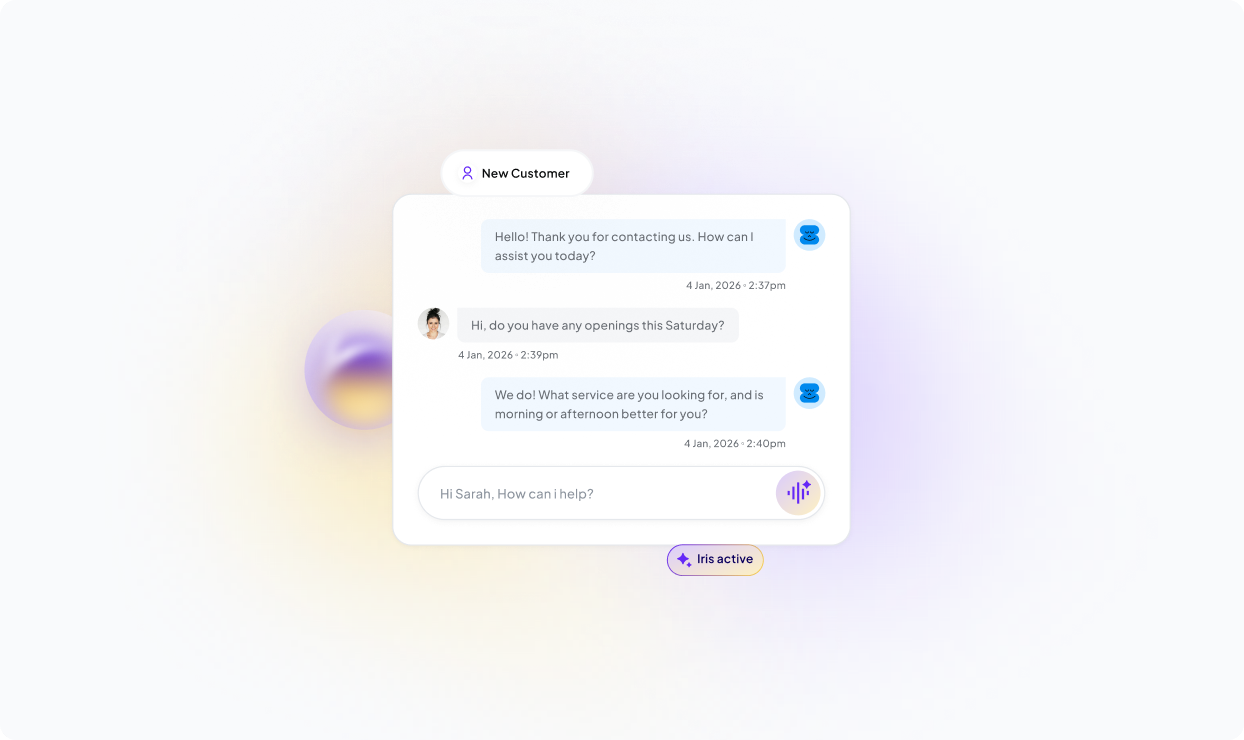
Voice, web chat, and text run on one system, so a busy morning never turns into a busy signal.
The follow-up never happens.
A number on a sticky note is not a pipeline. Messages without follow-up quietly expire.
A text within minutes, and the record kept.
Confirmations, reminders, and check-ins go out automatically, and every conversation becomes a record you can pick back up next week.
None of this is a staffing failure. It is a
A small business sells with the same hands that answer the phone. Iris closes that gap without a hire.
Live answering, virtual receptionist, or AI:
They differ in cost, coverage, and what happens after hello. Humans remain the best at empathy and messy judgment. If most of your calls are sensitive, high-stakes conversations, buy the human service. If most are requests, questions, and bookings, the AI does the same work faster, at any hour, for less. Iris is the third type, built with that limit in mind.
What Iris does for a small business
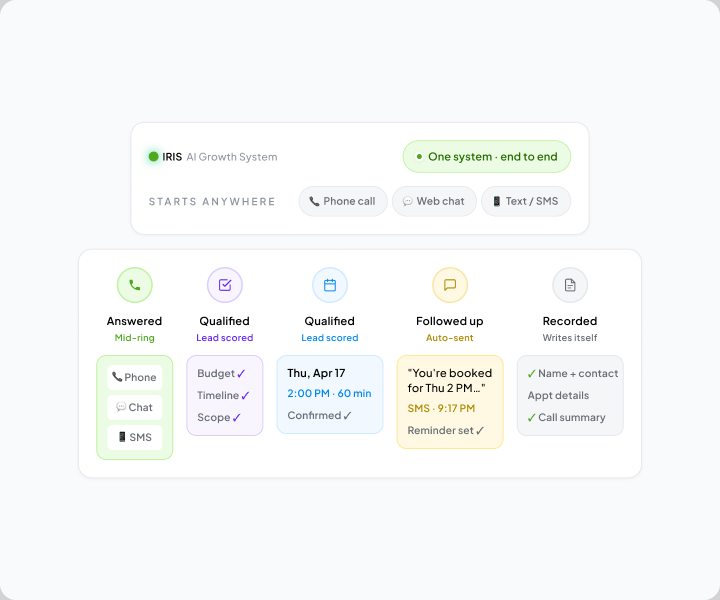
An answering service for small business calls is how most owners meet Iris. What they actually get is a growth system: it answers, qualifies, books, follows up, and keeps the record, all without adding headcount. Then it does the same thing tomorrow, on every channel, at three in the morning.
Iris picks up in seconds, every hour of every day, in your business name and tone. The AI receptionist runs the conversation and the voice layer carries the call itself. You get a qualified request instead of a voicemail. Three callers at once? All answered.
Most visitors leave your site without a word. AI web chat greets them, answers questions, and collects their details before they drift off to compare competitors. The quiet channel starts producing leads.
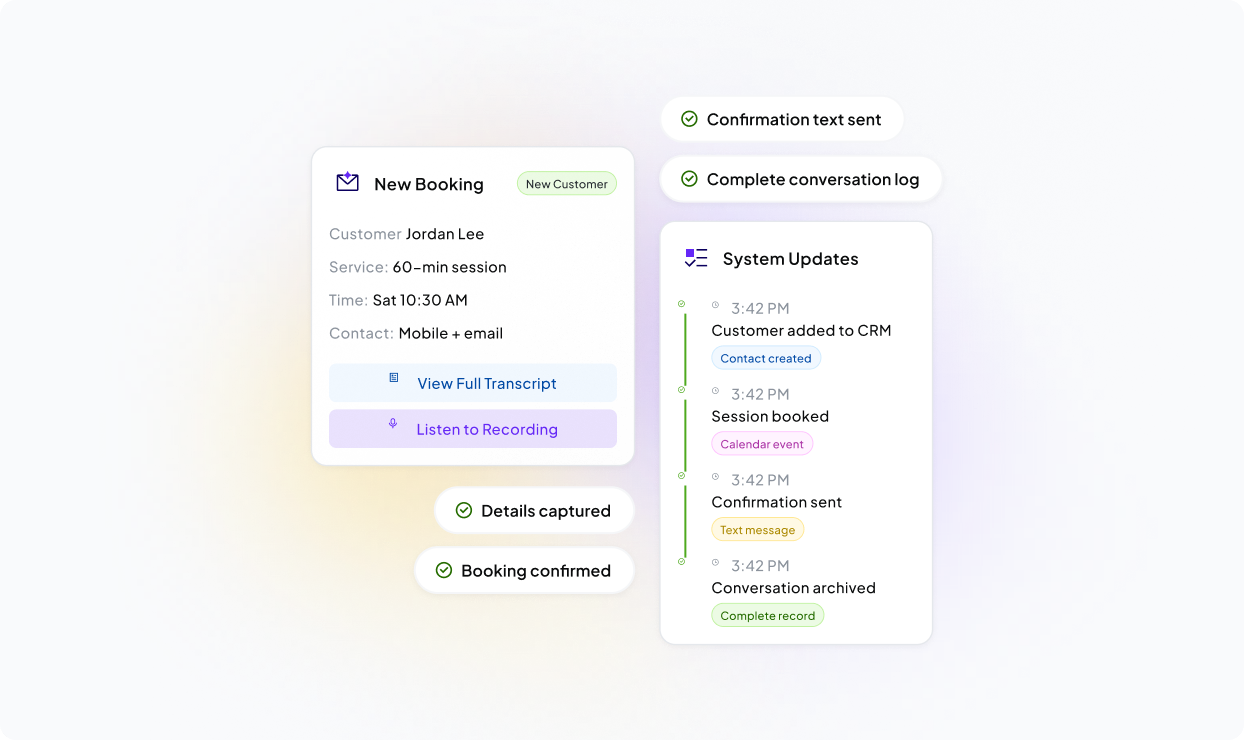
Iris connects to your calendar and offers real openings inside the conversation. The caller picks a slot and Iris confirms it before the call ends. No phone tag. No "someone will get back to you."
Confirmations, reminders, and check-ins go out automatically over AI SMS. The lead that used to sit in a notebook gets a text within minutes. Fewer no-shows, fewer forgotten quotes.
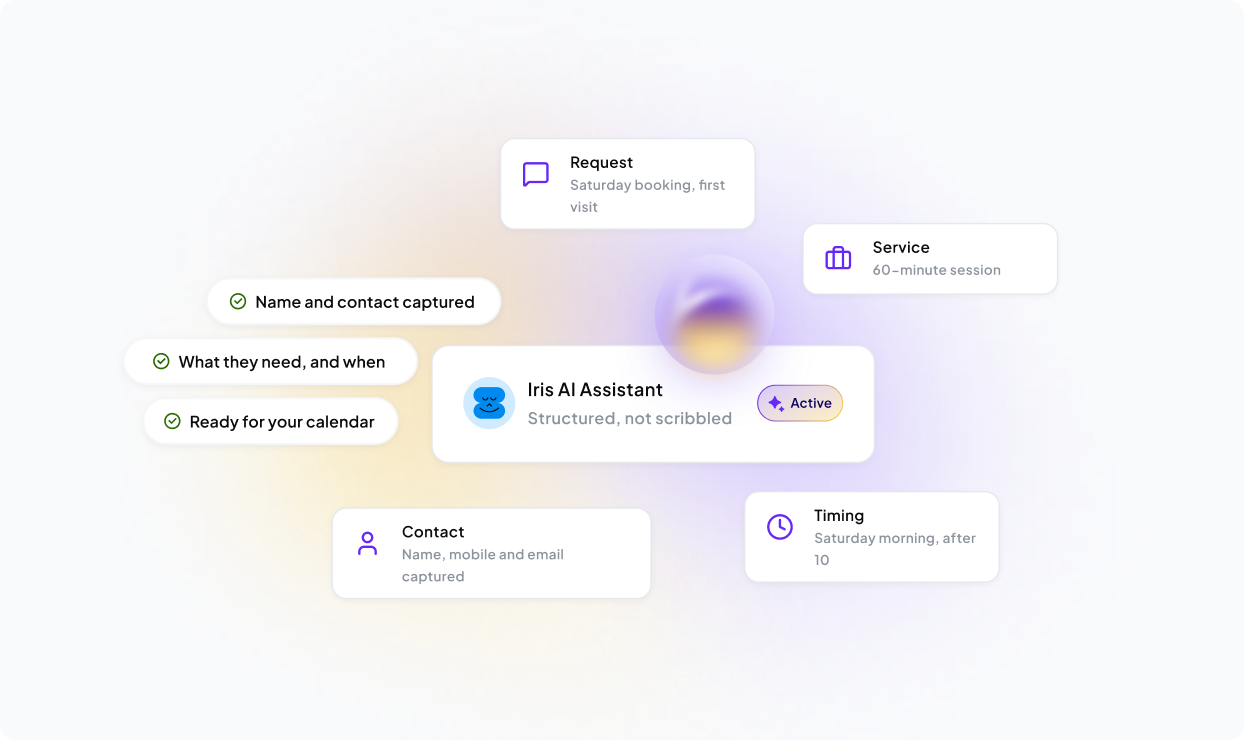
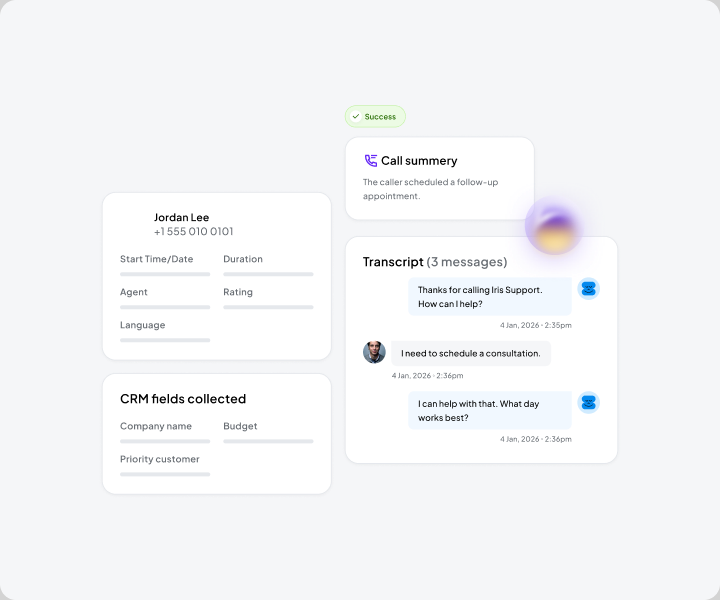
Nothing gets lost between the call and the callback. The Iris AI CRM captures each call, chat, and text as a structured record with the whole conversation attached. Pick the thread back up next week and you are not starting from a phone number and a guess.
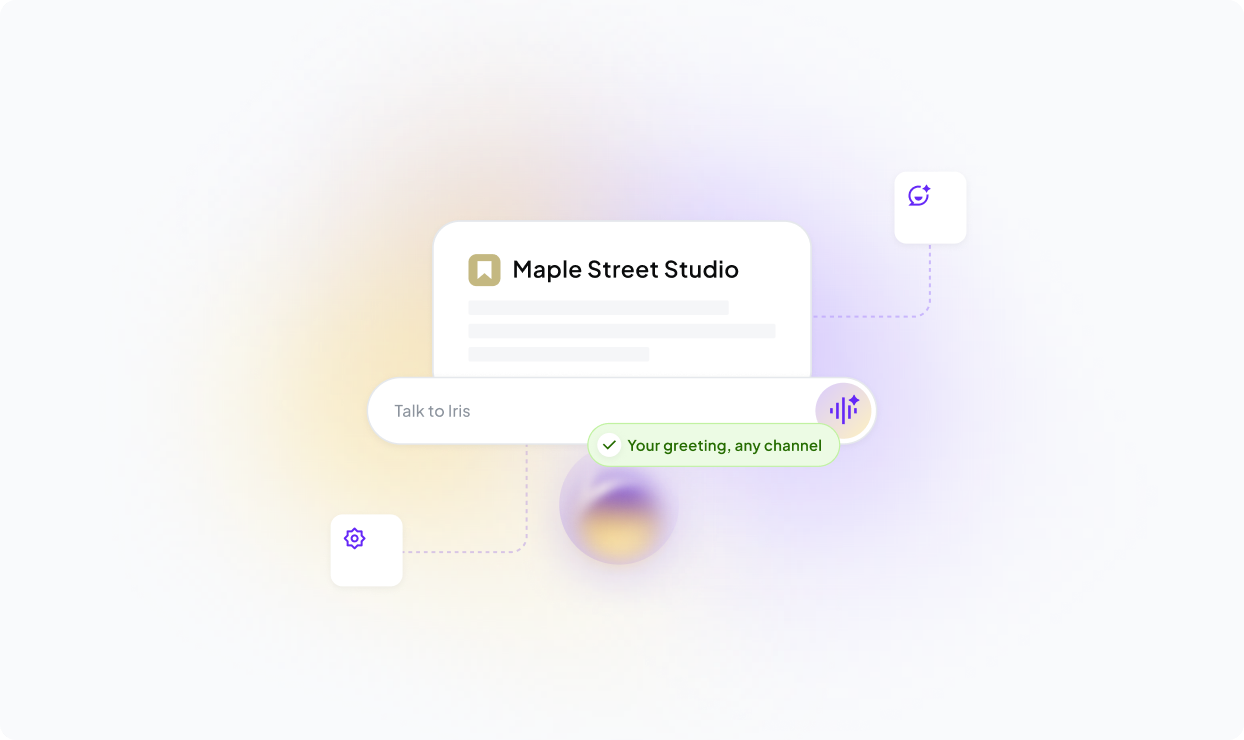
Iris holds a single working picture of your business: your services, your prices, your hours, your rules about who gets called back first. Every channel answers from it, so the text confirms what the call promised and the chat quotes the same price your phone does.

What an answering service actually costs a small business
Cost is the first question owners ask, and most vendors answer with a maze. Published guides are more direct: Housecall Pro puts typical live answering plans at $135 to $450 per month, and Nextiva finds most live plans between $100 and $1,000 or more, with AI-powered services generally landing between $50 and $500. Software pricing instead of staffing pricing. The billing model matters more than the sticker, so get three answers in writing.
What happens to the price when call volume doubles?
Per-minute and per-call plans look cheap in the demo and grow teeth in a busy month, while flat plans are predictable but cap usage. Know which one you are buying.
What does the service actually do with each call?
A service that books the appointment is buying you revenue; a service that takes a message is renting you a notepad.
What do nights and weekends cost?
Iris never closes, which makes it an after-hours answering service without a separate plan. Nights, weekends, holidays, and lunch rushes are all the same price.
How Iris handles a small-business call
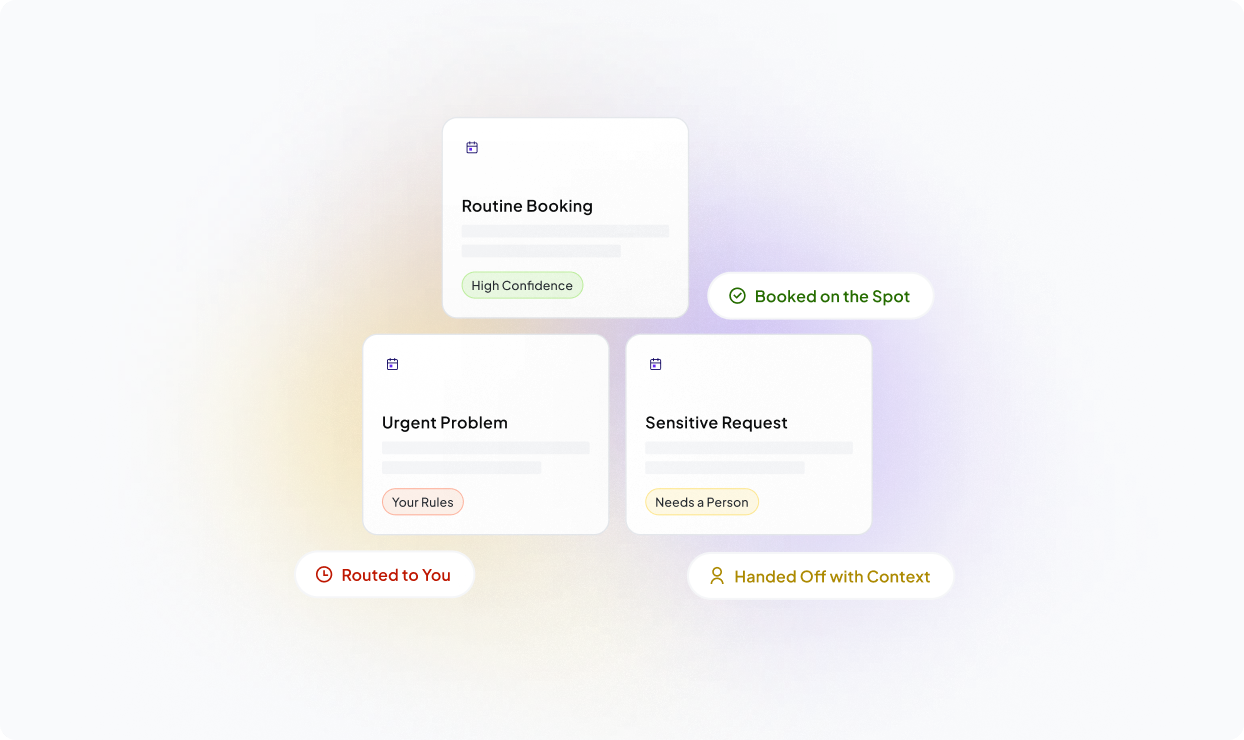
One loop, every time.
The short list of things that will not happen
You have been sold tools before. Here is what Iris will not do to you.
Iris does not ask you to replace your calendar, your CRM, or your way of working. It answers the conversation and hands your tools a clean, structured result.
You define what gets escalated and who it goes to. An upset customer, an emergency, a sensitive request: Iris routes those to a human immediately instead of improvising.
Nothing to install, nobody to hire, no six-week onboarding. You spend an afternoon on it, not a quarter, and most owners have Iris answering the same week.
The conversations Iris captures belong to your business. You can turn on recording disclosures where your state requires them, and text threads can include an opt-out.

Built by dotfun.
Iris carries the bias of the dotfun team that built it, Run Good, and the bias is simple: we treat the speed of your first answer as a revenue number. When your needs outgrow the product, the same team builds custom AI Solutions: deep integrations and logic beyond what any product ships. Want a read on where your business actually is with AI? Take the free AI Maturity Assessment: a 15-minute conversational assessment that returns a written action plan within the hour.
Built for small businesses of
Iris runs the same loop whether you cut hair, file taxes, or fix furnaces. A few industries have enough patterns of their own that we built them dedicated pages, and if that is you, start there. Everyone else: this page is yours.
Property management
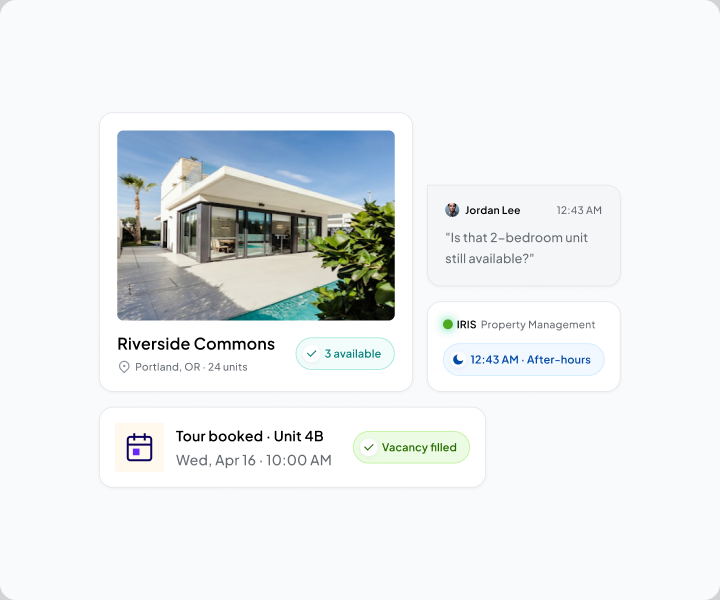
Leasing calls, maintenance triage, tenant follow-up.
Legal practices
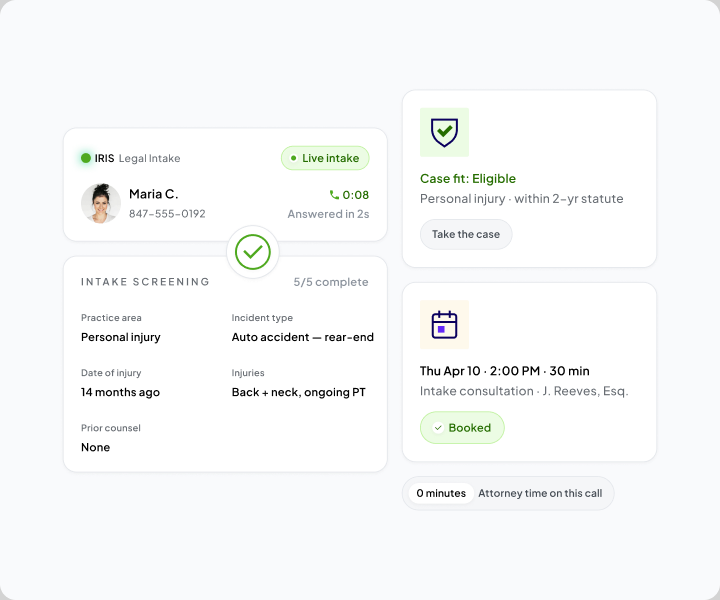
Intake, screening, consultation booking.
Home services
Emergency routing, job booking, on-my-way texts.
Every other small business
Salons, clinics, gyms, agencies, accountants, tutors, shops. If your customers call, chat, or text, Iris covers you here.
Simple Pricing That Pays For Itself
Most teams compare Iris to a $3k–$5k/month receptionist hire. We prefer a simpler benchmark: one saved job can cover the month.
Owner questions about a small business answering service
A small business should budget roughly $135 to $450 per month for live answering, or generally $50 to $500 a month for an AI-powered service. Both figures come from published cost guides: Housecall Pro for typical small-business plans, Nextiva for high-volume plans reaching $1,000 or more. The bigger trap is the billing model: per-minute and per-call plans look cheap until a busy month arrives.
A traditional service stops at the message: someone takes a number, and the callback waits for you at the end of a long day. Iris finishes the conversation instead: it asks your qualifying questions, books the appointment, texts the confirmation, and keeps the record. For an owner wearing every hat, that is one hat gone.
An answering service is a shared call center that takes messages. A virtual receptionist is a remote human who represents your business more personally, at a higher price and usually within business hours. An AI receptionist is software that answers instantly on every call, at any hour, and can qualify, book, and follow up on its own. Iris is the third type, with escalation to your people built in.
Yes. Iris never closes, which makes it an after-hours answering service for small business without a separate plan. Nights, weekends, holidays, lunch rushes: every call is answered in seconds, qualified, and either booked or routed by the rules you set.
They are one system, not five subscriptions. The AI receptionist and voice layer answer the call, AI web chat catches website visitors, AI SMS runs the text follow-up, the AI calendar books the appointment, and the AI CRM layer logs every conversation in one record.
The good ones book and qualify; that is the point of choosing AI over a message service. Iris asks your qualifying questions, checks your real calendar, books the slot, and sends the confirmation before the caller hangs up. A service that only takes messages is voicemail with better manners.
Start with the phone, because that is where a small business leaks demand first. Answering, booking, and follow-up are high-volume, rules-based tasks, the kind of work AI does reliably today. The part owners underrate is what happens next: every conversation becomes a record you can work, so the phone stops being an interruption and starts feeding the business. If you can name what you want in one sentence, it is already an Iris feature; the businesses that genuinely need custom AI Solutions have a workflow nobody else runs.