
The AI phone receptionist that answers your calls like a person, not a phone tree
The most personal channel you own usually gets a machine that punishes the caller. Press one. Hold. Repeat yourself. Iris AI Voice picks up on the first ring and handles the whole call live, in natural speech: an AI phone receptionist built to answer well.
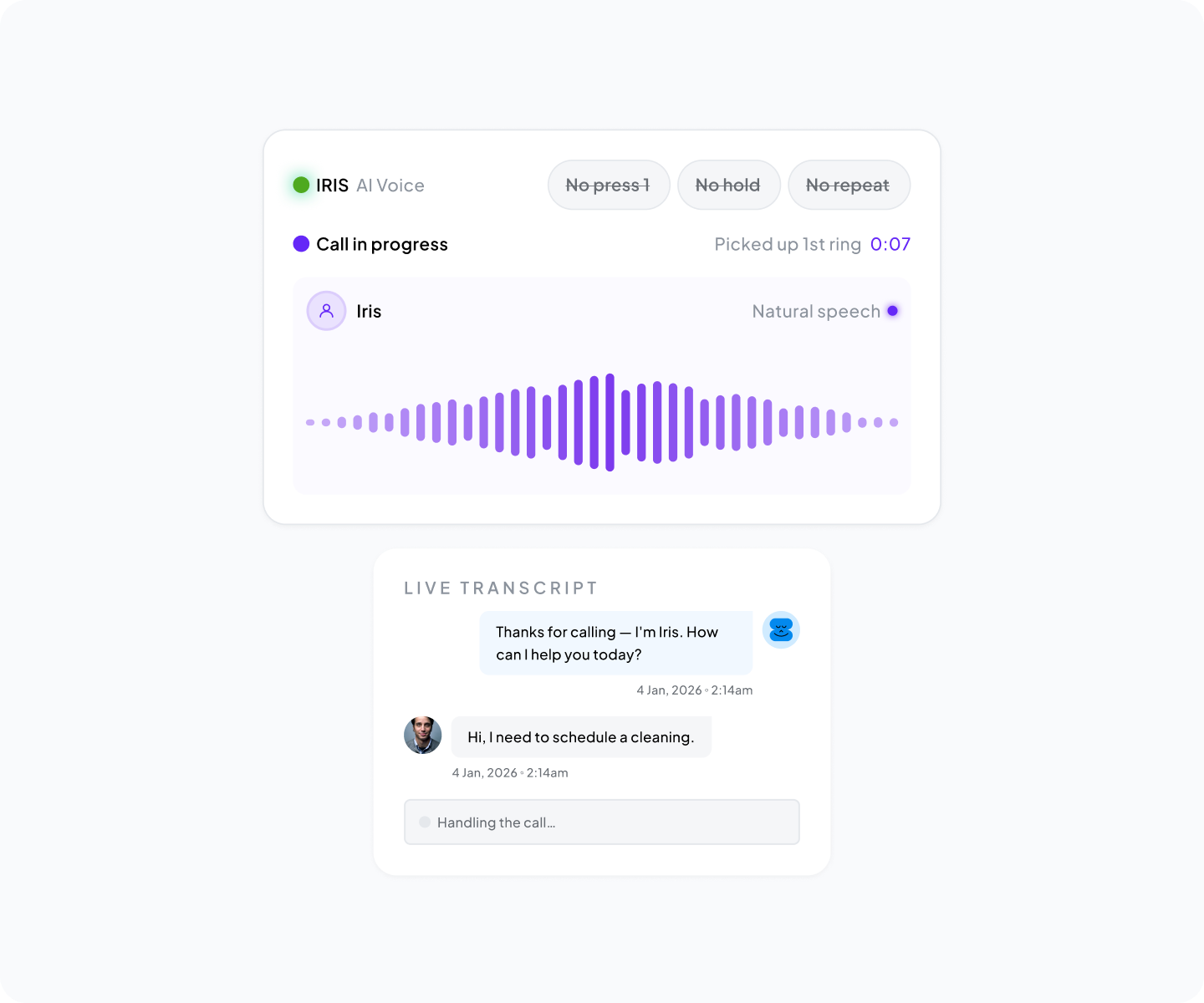
A phone tree is a first impression, and it is a
A buyer with money in hand calls, and the first thing they meet is friction. The phone is rarely the problem. What kills you is everything the caller has to survive before a real answer.
It rings out to voicemail.
Most callers will not leave a message. They hang up and dial the next business.
Answered on the first ring, day or night.
Iris picks up every call the moment it comes in. No ring-out, no after-hours voicemail, no "all our agents are busy." The caller reaches a real answer at the second their intent is highest.
The phone tree buries them.
Press one for sales, press two for support, press three to hear the menu again. Every layer of a phone menu is another reason for a busy caller to give up.
No menu. Iris answers the question they asked.
Iris skips the menu and handles or routes the request on the spot, in plain language. The caller does not want to be routed. They want to be heard.
They get put on hold.
Hold time turns an interested buyer into an irritated one. The longer they wait, the colder the lead.
Handled live, on the same call.
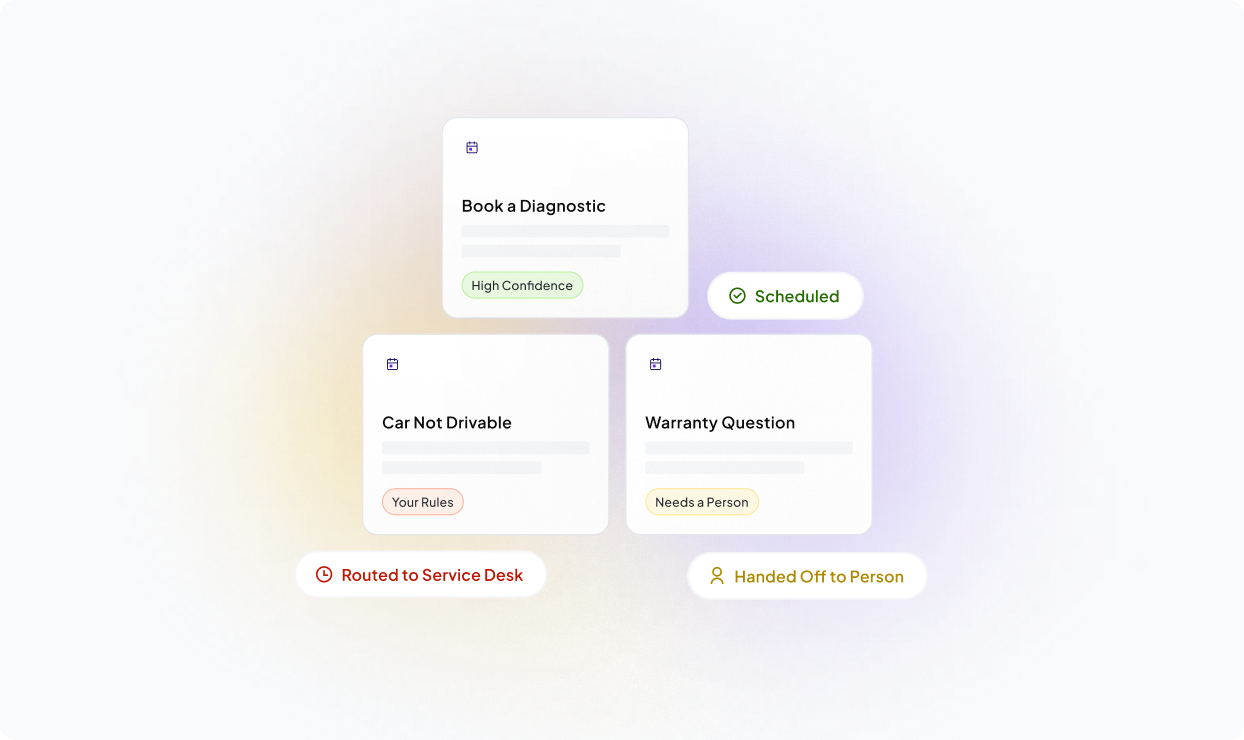
Iris answers the common questions, qualifies the caller, and routes the call to the right next step while they are still on the line. Sorting a serious buyer from a wrong number happens inside the call, not in a callback queue.
The robot does not understand them.
Old voice automation only handles the exact phrase it expects. The caller talks like a person, and the conversation falls apart.
Built for real speech.
People interrupt, change their mind, and ask three things at once. Iris follows real speech and answers the question the caller actually asked, instead of asking them to repeat it.
What Iris AI Voice does on a live call
AI Voice is the voice layer of the Iris AI receptionist: the part that actually answers the phone and carries the conversation. If you arrived searching for an AI voice agent, this is that layer. Here is what happens between the first ring and the hang-up.
Iris picks up every call the moment it comes in, day or night. No ring-out, no after-hours voicemail, no "all our agents are busy." The caller reaches a real answer at the exact second their intent is highest.
Iris does not read a rigid script in a robot cadence. It speaks in natural language, so the caller feels like they reached your business, not a machine. The voice is the whole point of an AI phone receptionist. Get it wrong and nothing else matters.
People do not call in tidy sentences. They interrupt, change their mind, and ask three things at once. Iris is built to understand real speech and answer the question the caller actually asked, instead of asking them to repeat it.
Iris does not just take a message and hang up. It answers your common questions, qualifies the caller, and routes the call to the right next step. Sorting a serious buyer from a wrong number happens inside the call, not in a callback queue.
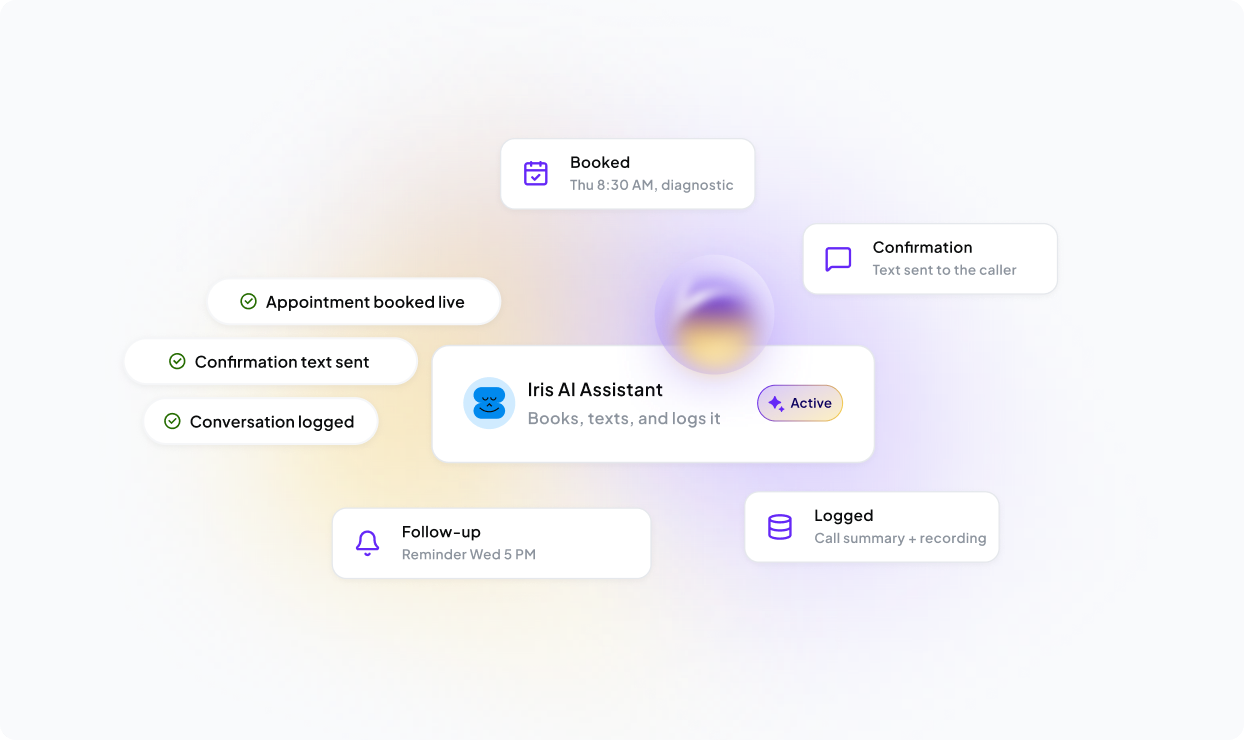
The voice is where the call starts, not where the value ends. On the same call, Iris can book through AI Calendar, text through AI SMS, and log the conversation into your AI CRM. AI Voice answers the phone; the rest of Iris makes sure the call turns into something.
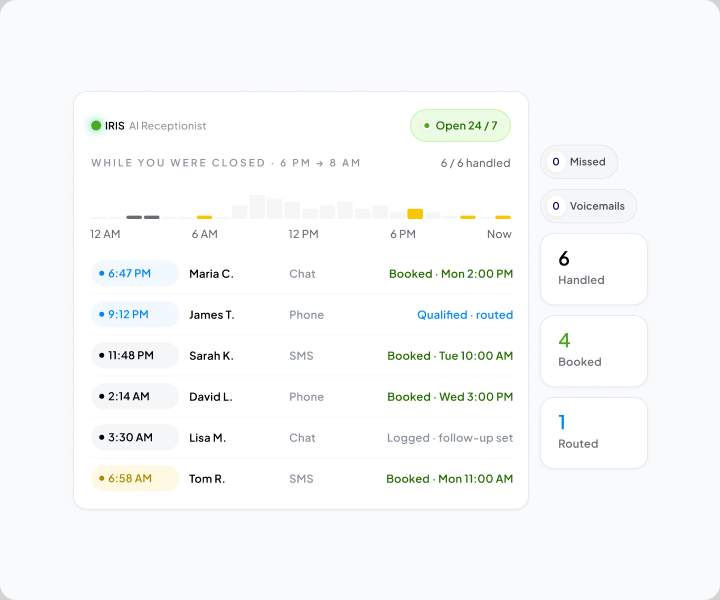
Answering the phone is the
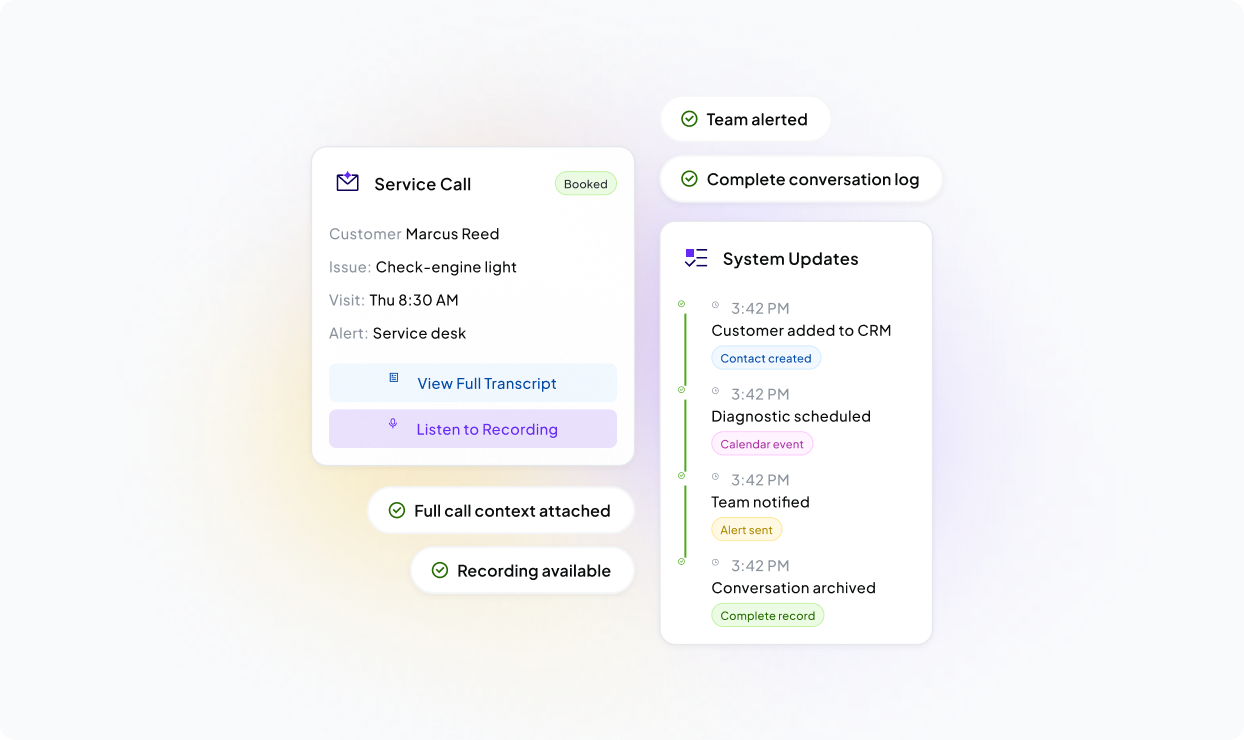
Most phone AI stops when the caller stops talking. Iris does not. The booking is already on the calendar. The follow-up text is already sent. The conversation is already written down, with what the caller asked attached, in the AI CRM your team works out of. None of that is a second tool: the voice answers out of the same business facts every other Iris channel answers out of, which is why what a caller hears never contradicts what a visitor reads.
How Iris answers and handles a call in real time
No phone tree. No hold music. No lead waiting on a callback that never comes. Here is the call, start to finish.
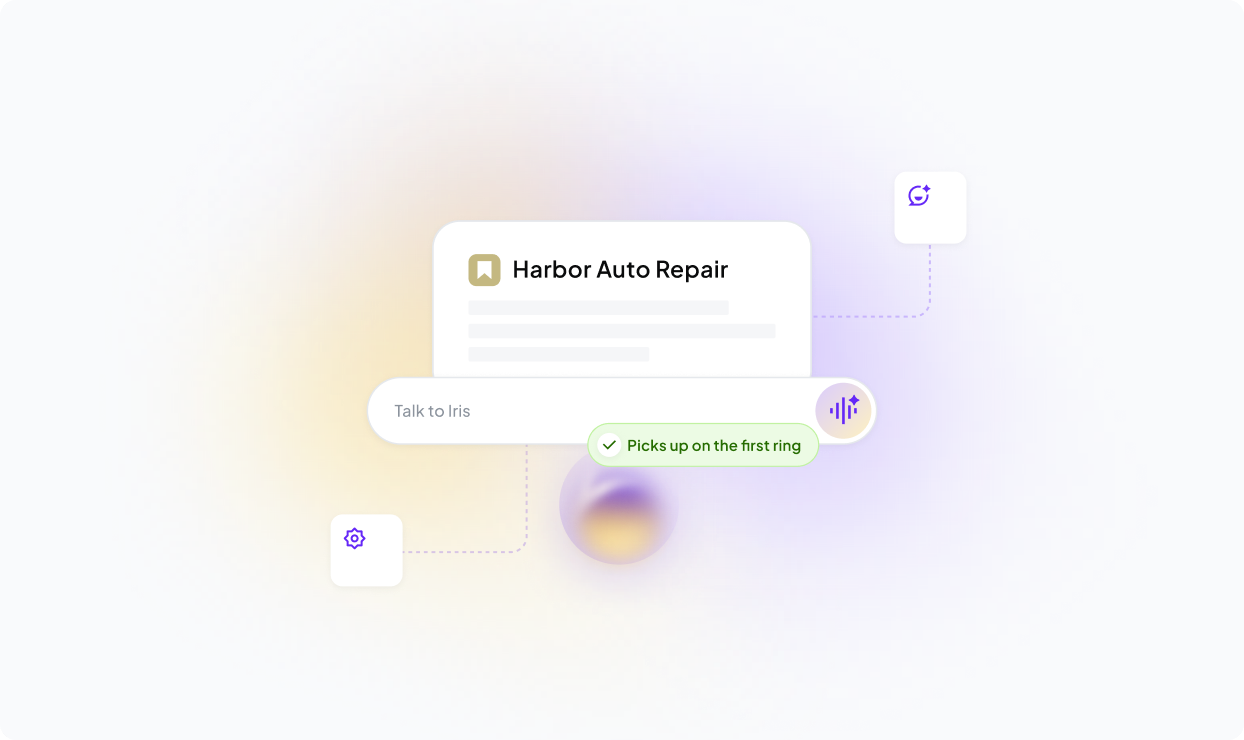
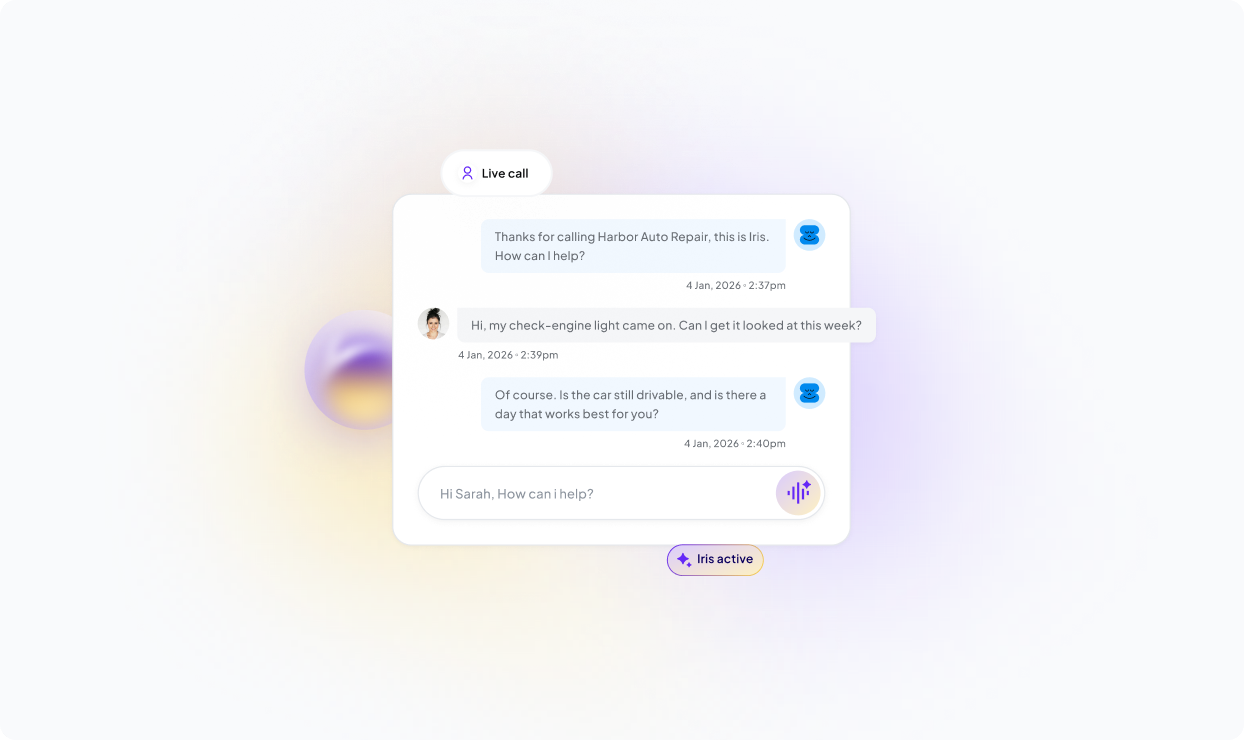
Why a real voice beats a phone tree, a voicemail box, or a desk that
The difference is not a longer feature list. It is the experience in the first ten seconds. Most phone setups make the caller do the work. Iris does the work for them.
The fears worth naming before Iris answers your line
The phone is personal, so the fear is real. You do not want a robot embarrassing your brand on your most important channel.
Iris speaks in natural language, not a flat text-to-speech script. The goal is a caller who hangs up thinking they reached your business.
Iris handles what it should and escalates what it should not. When a call goes beyond its lane, it captures the details, routes the caller to a person, and notifies your team.
You do not have to print new cards or change how customers reach you. Iris answers on your existing business line, so the calls you already get start getting answered well.
Iris answers inside the rules you set: what it can answer, what it qualifies, and when it hands the call to a person. Iris handles the first response so your team can focus on the rest.
Built by dotfun.
Automating the unglamorous parts of a growth-stage company is what we do all week at Run Good. AI Voice is what that engineering sounds like when it picks up the phone: a real answer on the first ring, without an extra hire. A missed call is leaked revenue, not a missed message. We built Iris to treat your phone line that way.
Built for the businesses whose phone
An AI phone receptionist earns its keep fastest where the phone is the front door and a missed ring is a missed job.

Owner-operators with a phone in their pocket
Both hands are on the work, and the buzzing in your pocket is a job. Iris takes it: it catches the calls you would otherwise miss, answers them well, and follows up.

Trades and clinics whose customers call, not click
When a customer needs you now, they call the business that picks up first. Iris makes sure that is you, day or night, and logs the call so nothing slips between the first ring and the job.

Founders who read the phone as pipeline
You know a fast, well-handled first call wins more deals than a slick callback later. Iris makes that quality of answer automatic.

Multi-line teams that need coverage at scale
For larger teams and RevOps leaders, Iris is the always-on inbound voice across every line you own. The call, the booking, and the record happen in one pass instead of three.
The honest version of what an AI phone receptionist does
An AI phone receptionist is software that answers your inbound calls in a natural voice, understands what the caller wants, and handles the call live. Instead of pushing the caller through a phone menu or out to voicemail, it follows real speech, answers common questions, qualifies the caller, and routes the call. Platform vendors call the underlying software an AI voice agent; an AI phone receptionist is that agent given a front-desk job. The point is not to deflect the call. It is to answer it well, around the clock.
When a call comes in, Iris picks up in a natural voice, answers the common questions, and qualifies and routes the call. On the same call it can book the appointment, send a follow-up text, and log the conversation. You set the rules for what it handles; Iris notifies your team when a human should step in.
AI Voice automates the live handling of an inbound call: answering on the first ring, greeting the caller, answering frequent questions, qualifying, and routing. Because it connects to the rest of Iris, it can also book on the call, text the follow-up, and log the call. AI Voice is built around the inbound call, from the first ring to the finished record.
AI Voice is the phone channel inside one connected Iris system, so the call does not end when the caller hangs up. It books through AI Calendar, texts follow-up through AI SMS, logs the conversation into your AI CRM as part of your system of record, and shares context with AI Web Chat. A caller who phones today and texts tomorrow is one record, not two strangers.
AI Voice is best where the phone is the front door and a missed call is a missed job. Small business owners, local-service companies, and growth-minded founders who lose leads to voicemail or an after-hours ring-out feel it first. It is also the right fit if you want an AI phone receptionist for small business that sounds professional without hiring a full-time front desk, and larger teams run it as the always-on inbound voice on every line. If you are comparing AI voice agents, Iris is the packaged one: the inbound call handled end to end, no assembly required.
AI Voice is the voice layer: the part that answers the phone, sounds human, and handles the call. The AI Receptionist is the whole front-desk experience it plugs into: capturing the lead, booking through AI Calendar, following up through AI SMS, and logging into AI CRM across phone, chat, and text. AI Voice is how Iris answers the phone; the AI Receptionist is everything Iris does once the conversation starts.
Iris is built to sound like a person, not a flat text-to-speech script. When a request goes beyond what it should handle, it does not fake an answer. It captures the details, routes the caller to the right person, and notifies your team. You stay in control of where that line sits.
Yes. Iris is built to answer on the business line you already use, so you do not have to reprint cards, change listings, or retrain customers on a new number. The calls you already get simply start getting answered well. Confirm the exact setup path during onboarding when you sign up.