
The AI CRM that starts where your leads actually enter: the first conversation
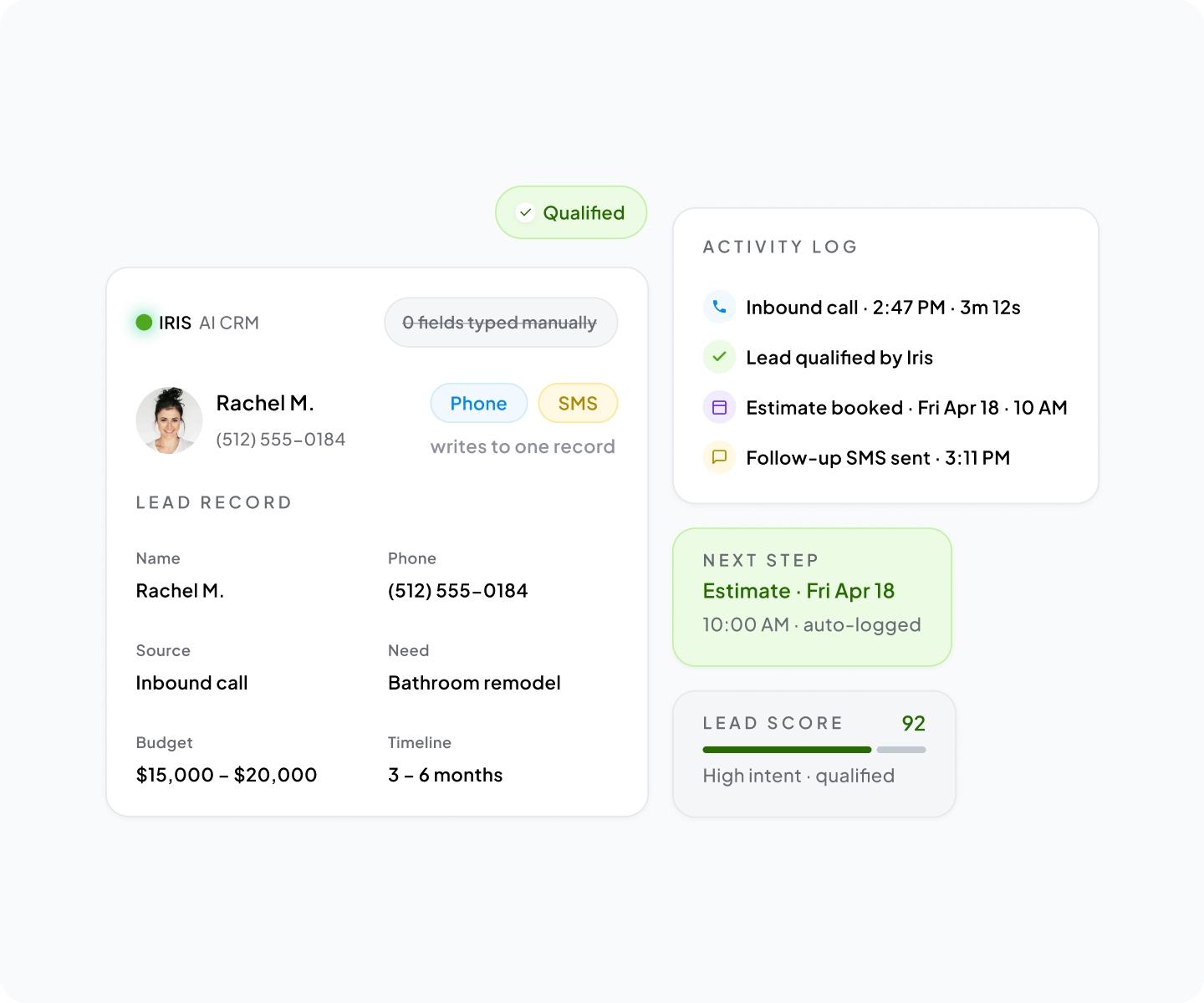
Most CRMs are a database that waits for a lead to be remembered and typed in. Iris answers the call, the chat, and the text, qualifies the lead, logs it, routes it, and follows up automatically. Every channel writes to one AI CRM record.
Your CRM is a graveyard of leads
The CRM is full of stale records, half-typed notes, and contacts nobody touched after the first call. It is not a system of record. It is a parking lot for demand that already slipped away. The tool is rarely the problem. What kills you is everything that has to happen before a lead ever reaches it.
The call goes to voicemail.
A buyer calls, nobody picks up, and they dial the next business on the list. The lead was missed before the CRM ever had a chance.
Captured at the moment of intent.
Iris answers inbound calls, web chats, and texts the moment they come in, 24/7. A buyer never hits voicemail, never stares at a silent chat box, never waits until morning.
Someone has to type it in.
The lead only exists once a human remembers the conversation and enters it by hand. Busy days, that does not happen. The record is never created, or it is created wrong.
Logged automatically, context attached.
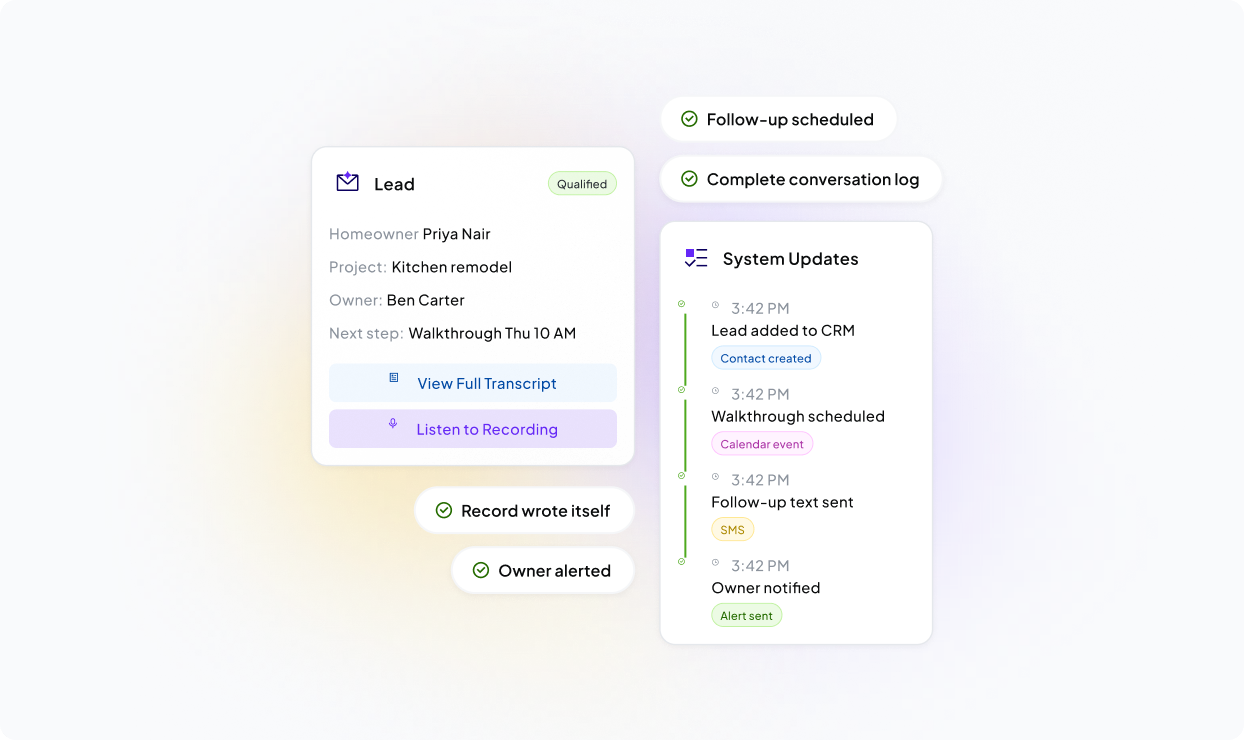
Every call, chat, and text is written to the AI CRM with the intent, the context, and the next step attached. The lead enters your world already captured and already documented.
The follow-up is too slow.
A lead that gets a reply in minutes is a live conversation. A lead that gets a reply tomorrow is a cold one. Manual follow-up always loses the race against attention.
Automated follow-up over text.
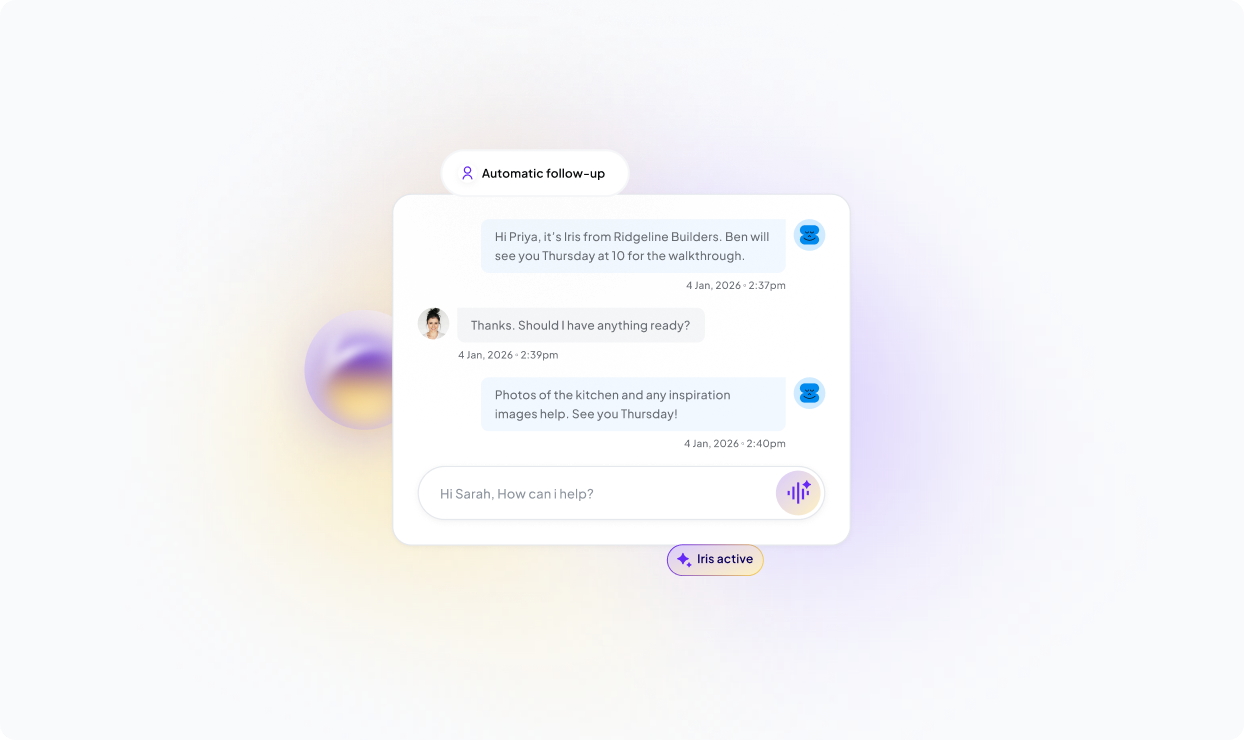
Iris follows up automatically after a call or chat, so the conversation keeps moving while the buyer is still paying attention. A first contact becomes a booked next step without anyone having to remember it.
The handoff is messy.
Notes live in someone's head, a sticky pad, and three different inboxes. By the time sales sees the lead, half the context is gone.
Routed with the context, team notified.
Iris sends the right lead to the right person with the context attached, and notifies your team so a human can act fast. No lead sits in a queue nobody is watching.
What Iris does as an AI CRM
Iris works at the front of the funnel, where the lead actually enters. It captures the conversation live, qualifies it, logs it, routes it, and follows up without a human typing a thing. Every step writes to the same record, so the follow-up knows what the call said.
Iris answers inbound calls, web chats, and texts the moment they come in, 24/7. A buyer never hits voicemail, never stares at a silent chat box, never waits until morning. The conversation gets captured at the exact moment of intent, which is the one moment a passive CRM cannot reach.
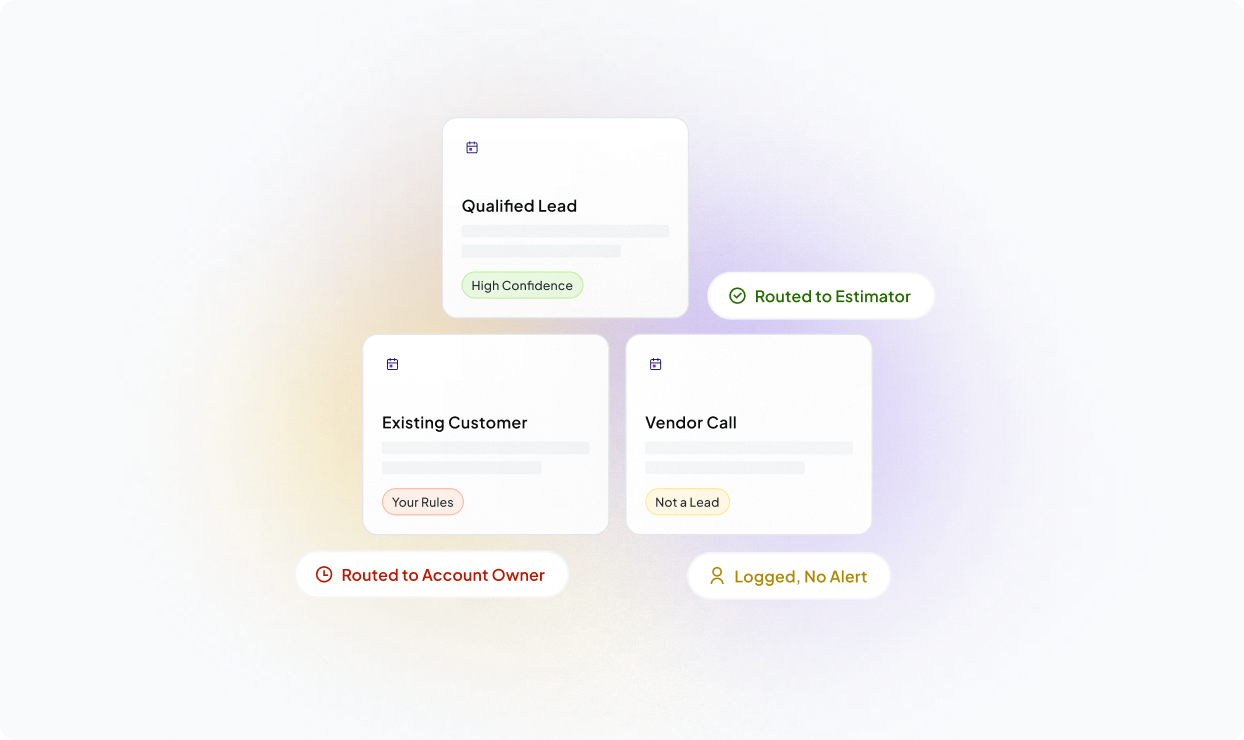
Iris does not just take a message. It asks the qualifying questions, collects contact details and intent, and figures out what the lead actually wants before it ever reaches your team. The work of sorting good-fit from tire-kicker starts in the first sixty seconds, not three days later in a sales review.
A captured lead is worth nothing if it sits. Iris follows up automatically over text after a call or chat, so the conversation keeps moving while the buyer is still paying attention. This is the automated lead follow-up that turns a first contact into a booked next step, without anyone having to remember it.
Iris sends the right lead to the right person with the context attached, and notifies your team so a human can act fast. No lead sits in a queue nobody is watching.
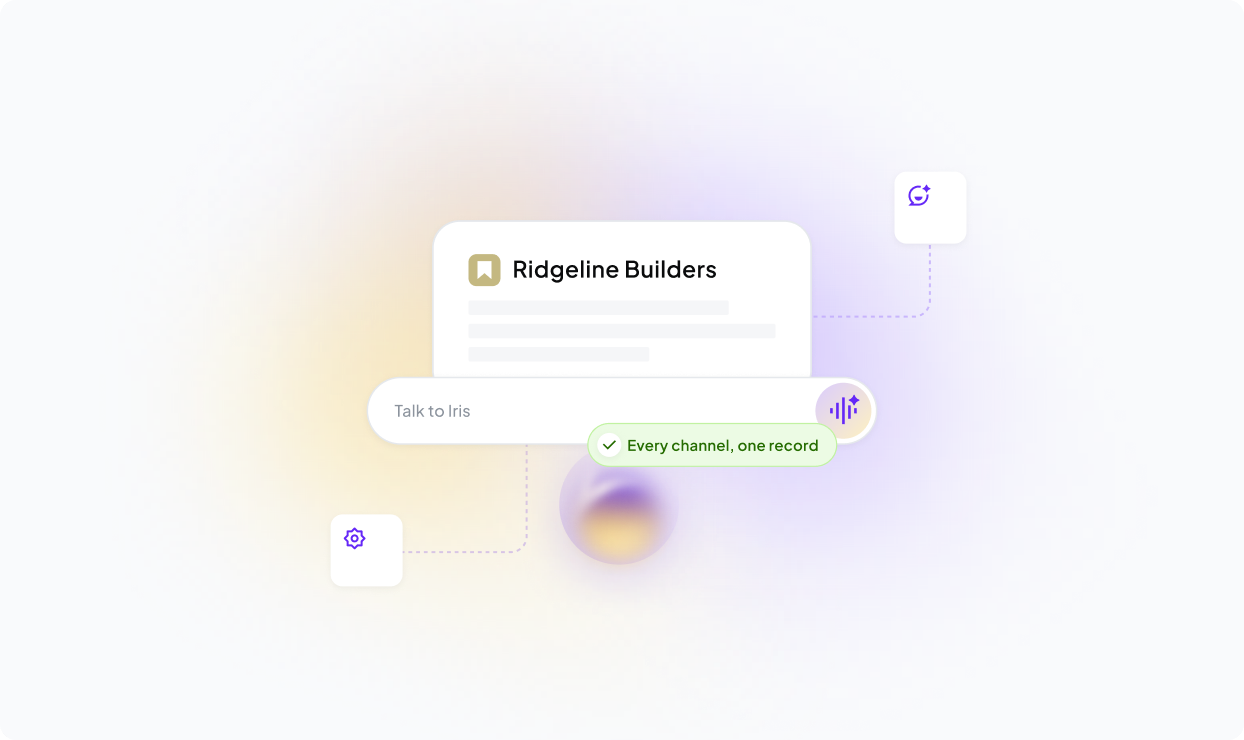
Every call, chat, and text is written to the AI CRM with the intent, the context, and the next step attached. Iris is the record, not a black box in front of one. The lead enters your world already captured and already documented.
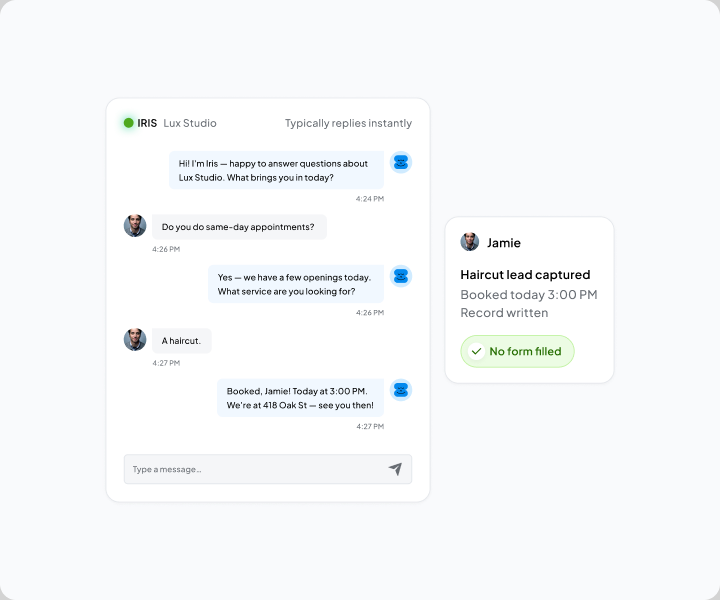
How Iris captures and acts on a lead in real time
No manual entry. No lead waiting on a human to remember it. Here is the loop, start to finish.
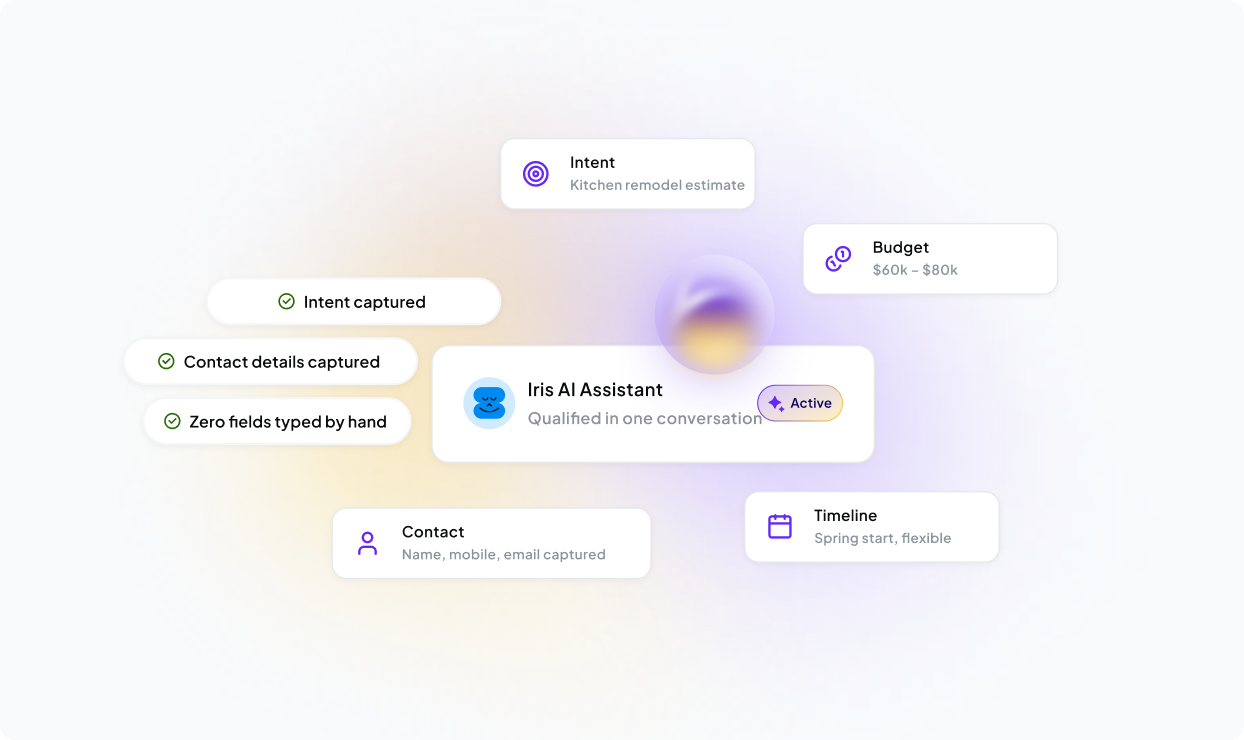
Why an AI CRM beats a database you
The difference is not features on a grid. It is where the work starts. A traditional CRM starts after the lead is captured. Iris starts at the conversation that creates the lead in the first place.
Four things that stay exactly as they are
You already have tools and probably some scar tissue from software that overpromised. Iris is built to slot in, not to rip everything out.
Iris does not rip out Salesforce, HubSpot, or whatever you run. It hands them a clean, documented record instead of a blank field someone fills in later.
The leads and conversations Iris captures belong to you, and you decide what gets logged and where it is routed. Speed never costs you control of your own information.
No engineering team. No long technical project. Iris starts working on your calls, chats, and texts, and earns its keep at the front of the funnel.
Iris works inside the rules you set: what it answers, what it qualifies, what it logs, and when it hands a conversation to a person. You decide where the line falls.

Built by dotfun.
Growth-stage companies run their operations on automations our Run Good practice writes. The AI CRM is what that engineering looks like as a product: capture, qualification, follow-up, and the record, all running on their own, so demand never goes un-answered. Nobody wins a deal by typing it into a CRM faster. They win it by answering first. Speed-to-lead is the number our growth team cares about most, and Iris is how it stops depending on who happens to be at a desk.
Teams that lose leads before the
Iris fits the teams where the lead enters by phone, chat, or text, and where a missed first response is a missed deal.

Owners running the business and the phone at once
One of those two loses, and it is never the customer in front of you. Iris takes the other one. It captures what you would otherwise miss, qualifies it, and follows up, so demand turns into booked work instead of voicemail.

Inbound-led local businesses
When a customer needs you, they call the business that picks up first. Iris makes sure that is you, and logs the lead cleanly so nothing slips between the first call and the job.

Founders who want speed-to-lead to stop being a habit
You know a fast first response wins more deals. Iris makes speed-to-lead automatic instead of a thing your small team has to chase.

RevOps and marketing teams evaluating AI CRM software
For revenue-operations leaders and marketing teams evaluating AI CRM and sales automation software, Iris is the always-on front of that system: every inbound conversation captured, qualified, logged, and followed up without a handoff to a human typist.
Where an AI CRM fits, and where it does not
An AI CRM is a customer relationship system that captures and acts on leads in real time, instead of waiting for a human to enter them by hand. A traditional CRM is mostly a database of contacts, deals, and notes that people type in. An AI CRM adds a layer that does the work itself: it answers the first conversation, qualifies the lead, logs it, routes it, and follows up automatically. Not a smarter database: a system that never lets a lead go un-captured or un-followed-up.
Because the answering is how the record gets created. Across phone, web chat, and text, Iris catches demand, qualifies it, books it, follows up, logs it: an AI growth system. Answering the call is the entry point, not the whole product. Every one of those conversations lands in the AI CRM as a structured, qualified record with the full context attached, which is the part manual entry has always gotten wrong. The channels are how demand arrives. The CRM is where it lives.
CRM automation removes the manual work between a lead showing up and a lead getting handled. Instead of a person catching the call, remembering the details, typing them into the CRM, and remembering to follow up, the system does it: it captures the conversation, records the lead with full context, routes it to the right person, and sends the follow-up on its own. For your team, that means faster response, cleaner records, and fewer leads lost to a busy day.
It works alongside it. Iris does not replace Salesforce, HubSpot, or whatever CRM you already run, and it does not pretend to be an enterprise CRM. It feeds the CRM you have with clean, qualified, logged leads from the first conversation, the part most CRMs leave to manual entry. Keep your CRM. Let Iris handle the capture and the first follow-up.
Iris's AI CRM includes lead capture and qualification, routing and notifications, and logging that keeps a clean record of every conversation the system handles. Conversations arrive through the AI receptionist for inbound calls, AI web chat, and AI SMS. Two of those run deep enough to stand on their own: the AI receptionist, which answers and qualifies every inbound call, and lead follow-up automation, which keeps the conversation moving by text after the first contact. The full Iris feature set shows how the channels fit around the record.
Iris sits at the front of your stack. It books at the calendar level and hands structured records to the tools you already run, so your CRM and your team get a complete handoff instead of a blank field. We built it that way on purpose: the lead should reach your existing system already captured, qualified, routed, and documented, not typed in later from memory.
Iris hands off rather than guesses. When a request goes beyond what it should handle, it captures the details, routes the lead to the right person, and notifies your team to step in. You stay in control of the moments that need a human, and Iris handles the first response.
The leads and conversations Iris captures belong to you. What gets logged and where it is routed are settings you own, not defaults we impose. Speed-to-lead should never cost you control of your data.
You do not need an engineering team to get started. Iris is built to start working on your calls, chats, and texts quickly, so the capture layer begins earning at the front of your funnel without a long technical project.