
The dental answering service that keeps your chairs full when your front desk is full
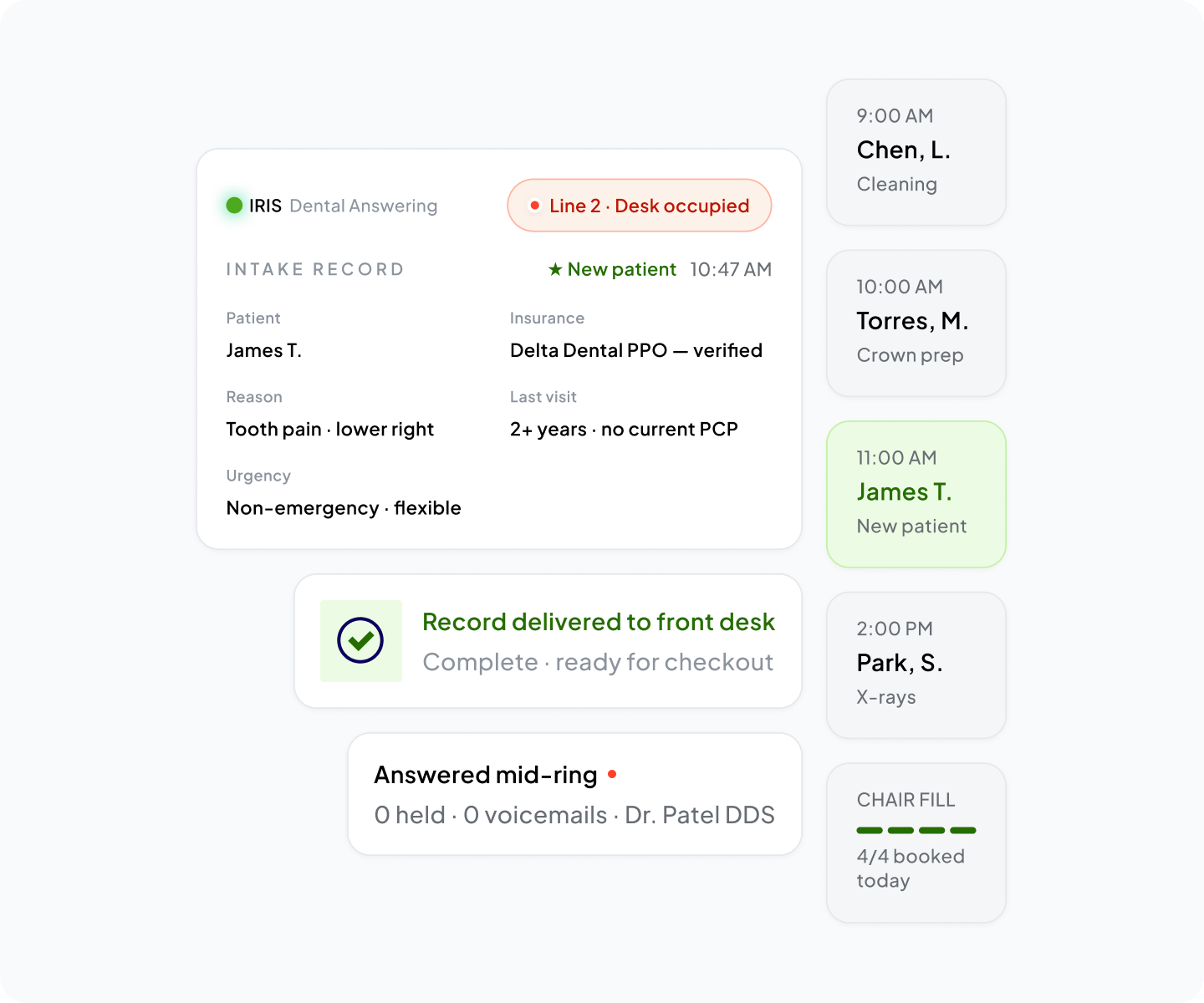
Your receptionist is checking out a patient when line two rings: a new patient, the most valuable call of the week, and nobody has a free hand. Iris answers mid-ring, books them into open chair time, and leaves your desk a finished record.
Where dental calls
An empty chair at two o'clock cannot be sold at three. Chair time is perishable inventory, and the schedule itself is your product. The problem is not that nobody answers your phones. Somebody does, and she is one person doing four jobs at once.
The checkout pileup.
One receptionist, a patient at the desk, a payment in progress, a question on line one, a new patient on line two. Line two loses.
Line two gets answered mid-ring.
Iris picks up the second line in seconds, greets the caller in your practice name, and captures who is calling and why while your desk finishes the checkout.
The lunch hour and the after-five gap.
Patients call when they are free: lunch, evenings, Saturday mornings. Exactly when your desk steps away or your office goes dark.
Answered at 12:30 and at 9 p.m.
The 12:30 call while the office eats and the 9 p.m. comparison shopper both get a warm answer, routine questions handled, and a booked appointment.
The new-patient call that rings out.
A patient shopping for a new dentist does not leave a message. They dial the next practice on the list.
Booked into open chair time on the first call.
Iris books directly against real availability. The new patient hangs up with a Tuesday appointment, not a callback promise.
The cancellation that never gets refilled.
A two o'clock cancellation reported at 1:40 is recoverable if someone has hands free. Usually nobody does.
A reschedule conversation the moment they cancel.
Iris opens a reschedule conversation by text as soon as the patient cancels, so the two o'clock becomes an opening you can resell instead of an hour that quietly expires.
Hiring another desk seat is not the fix the labor market will
The ADA Health Policy Institute found that vacant staff positions cut dental practice capacity by an estimated 10 percent nationally, and about one in three dentists without full schedules pointed to unfilled positions. Your whole team is stretched. The overflow needs somewhere else to go.
What Iris does as a dental office answering service
In a dental practice, Iris starts as overflow: it works alongside your front desk, not in place of it. Underneath, it is a growth system, and your schedule is where that shows up. It answers the calls your team cannot take, then screens, books, reminds, and logs every one.
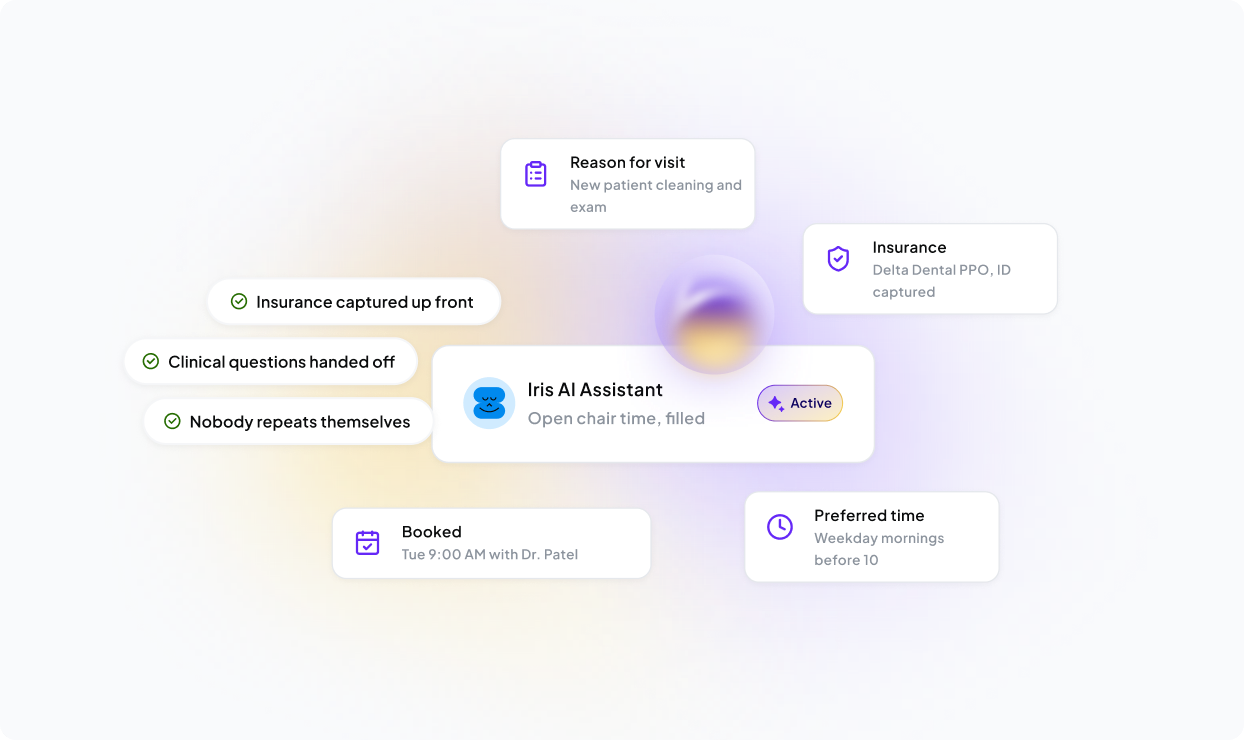
Iris picks up in seconds when your desk cannot: the second line at 10 a.m., the 12:30 call while the office eats, the 9 p.m. comparison shopper. Built on the AI receptionist and AI voice layers, it greets callers, answers routine questions like hours and whether you accept new patients, and captures who is calling and why.
Iris connects to your calendar and books directly against real availability. The new patient who called at lunch hangs up with a Tuesday appointment, not a callback promise.
Confirmations at booking, reminders as the visit approaches, and a reschedule conversation the moment a patient cancels, all over AI SMS. The cancellation becomes an opening you can resell instead of an hour that quietly expires.
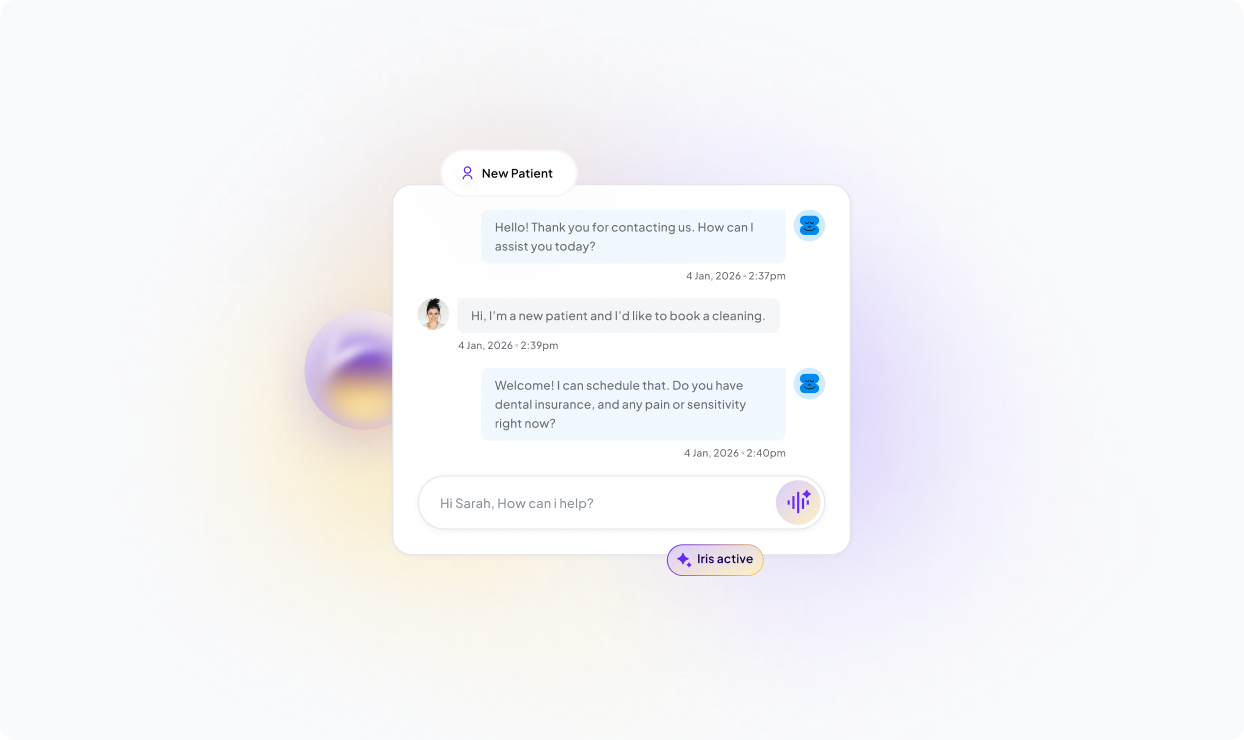
Plenty of new patients research first and call never. AI web chat answers them on your website, collects their details, and books them the same way.
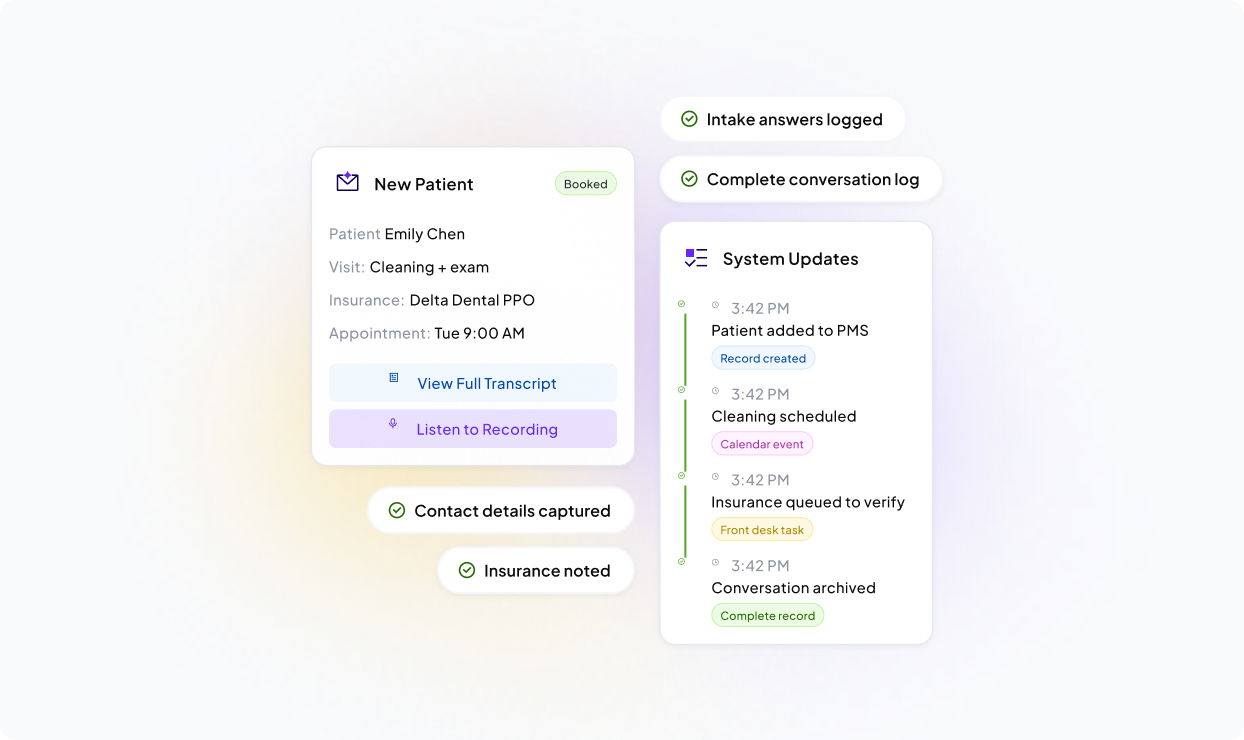
Every call, text, and chat is logged with the caller, the reason, and the outcome through the built-in AI CRM. Your front desk opens the day to a clean list, not a voicemail queue.

Virtual receptionist, answering service, or
Humans still win the conversations that need warmth and judgment: the anxious patient, the delicate billing conversation. The trade-off is arithmetic. One person answers one call at a time, during the hours you pay for. Iris does not replace human judgment; it routes to it, with full context attached.
How Iris handles a dental call
The same tight loop on every call, tuned to your practice: pick up, screen, book or hand off, leave a finished record.
Your front desk keeps all of this
You have a team you trust and patients who trust them. Iris is built to protect both.
Iris is overflow, not replacement. Your front desk still owns the patient relationship, the waiting room, and the judgment calls. Iris absorbs the second line, the lunch hour, and nights and weekends, then reports back to her.
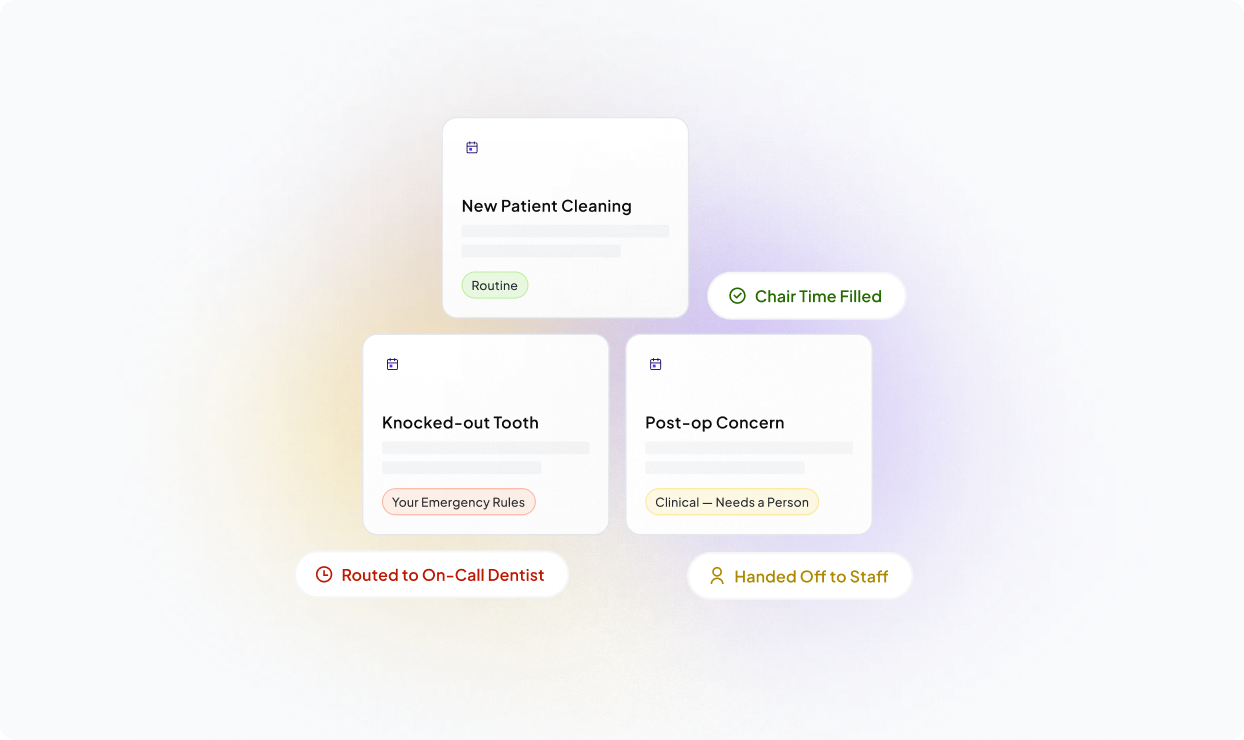
Iris never diagnoses, never gives clinical advice, and never quotes treatment. It recognizes when a call is medical rather than administrative, captures the details, and routes it to your team or on-call dentist by your rules.
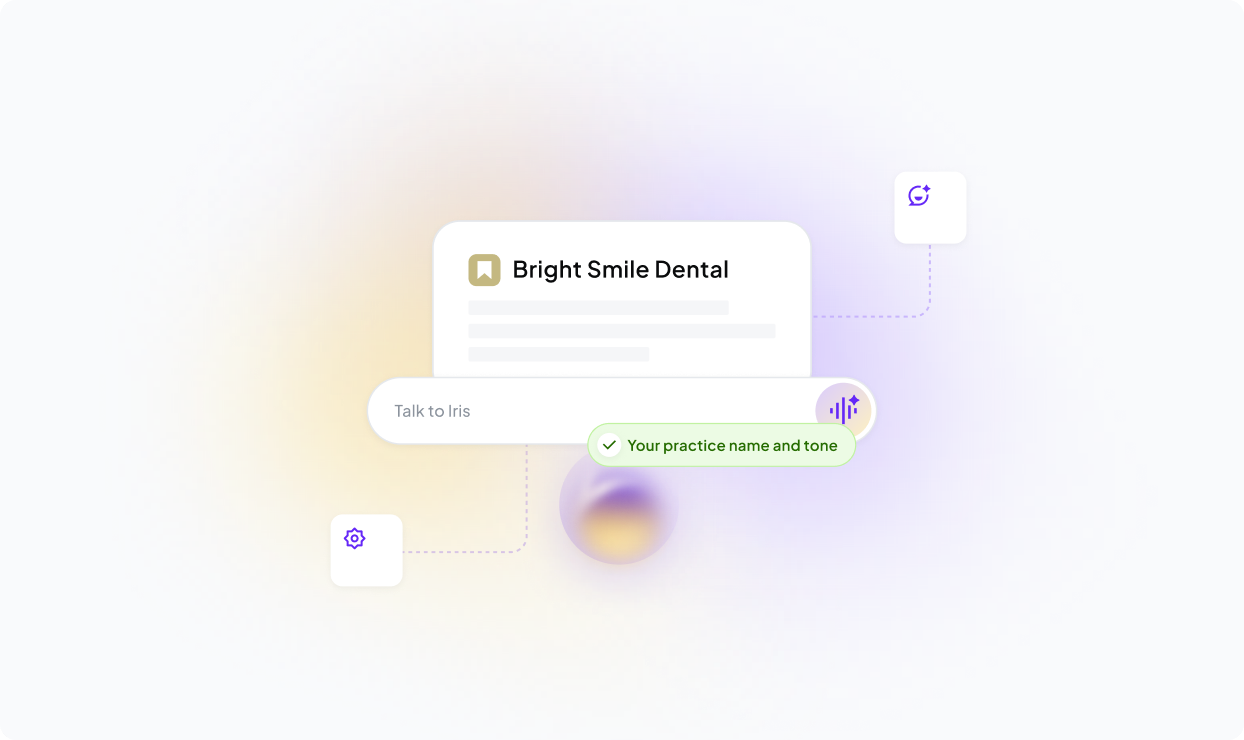
You show Iris how your practice already answers the phone; your front desk approves it before the first call. No six-week onboarding. No developer required.
The intake questions, what gets stored, who gets notified, and where each conversation routes are your configuration, not our defaults. Sensitive matters can be set to route straight to your staff.
Built by dotfun.
Automating appointment-driven businesses is Run Good's day job at dotfun, and Iris is that same work sold as a product. Our Feel Good marketers would add the obvious: the cheapest new patient you will ever acquire is the one who already called you. Need something beyond the product, like a multi-location workflow wired into your practice-management stack? That is a custom AI Solutions build from the same people.
Built for practices where the schedule is the business
Iris works as an answering service for dentists across practice types, from a single family practice to a multi-location group. Law firms run the same overflow pattern between court dates and consultations, and Iris covers them too.
General and family dentistry

Iris catches the overflow, books new patients, and keeps confirmations flowing so the columns stay full.
Pediatric and orthodontic practices

Reminders count double when the patient needs a ride. Iris sends them without anyone lifting a phone.
Oral surgery, endodontics, and specialty practices

Iris captures referrals cleanly and escalates pain and bleeding calls to your on-call clinician.
Group practices and DSOs

Iris answers every location's overflow the same way, logs everything centrally, and scales without another round of front-desk hiring.
Simple Pricing That Pays For Itself
Most teams compare Iris to a $3k–$5k/month receptionist hire. We prefer a simpler benchmark: one saved job can cover the month.
Dental answering service: what practices ask us first
Most dental practices pay $200 to $500 per month. Published market ranges put after-hours-only coverage around $100 to $250 per month, after-hours plus daytime overflow around $200 to $500, and full 24/7 service around $400 to $800. Compare what the money buys: messages taken or appointments booked. Iris prices as software, not per-minute staffing; sign up to see plans for your call volume.
A traditional answering service is built for a business with nobody at the phone. Your practice has somebody. She is standing at checkout with a patient, a payment, and a second line ringing. A message-taking service just adds one more callback to her afternoon. Iris works as overflow alongside your front desk: it answers the calls she cannot take, books them into open chair time, and hands her a finished record instead of a task.
Honestly. Your obligations depend on what your practice handles by phone and how any service is configured, so we do not make blanket compliance promises on a marketing page. With Iris, you control what it asks, what it stores, and where each conversation routes, and clinical matters always go to your team. Before you route patient calls through Iris, ask us about your compliance requirements and we will walk through your configuration together.
Iris screens the call against rules you set. A knocked-out tooth, bleeding that will not stop after an extraction, or severe swelling and pain escalates immediately to your on-call dentist, details attached. A routine 9 p.m. request gets booked into the next open slot instead. That is what after-hours coverage should mean: triage and action, not a voicemail box that says you open at eight.
Yes. This is where dental practices get the most from Iris. The AI calendar books and reschedules against live availability, and AI SMS sends confirmations, reminders, and day-of nudges, then opens a reschedule conversation the moment a patient cancels. A cancellation you hear about at 1:40 is chair time you can still sell; one you discover at 2:05 is gone.
Iris connects at the calendar and notification level: it books into the calendar your practice runs on, while your practice management software stays where the patient record lives. Every conversation is logged in the built-in AI CRM for a clean front-desk record every morning, so your team never has to reconstruct the call that led there. If you run Dentrix, Eaglesoft, or Open Dental, ask us how Iris fits your setup.
Iris collects what your front desk needs to finish the job: contact details, insurance carrier and member information, what brought the patient in, and how they found you. It does not verify coverage, quote benefits, or answer clinical questions; those stay with your team. The new patient gets a warm answer and a booked appointment on the first call; your desk gets structured intake instead of a scribbled note.